Get Full Government Meeting Transcripts, Videos, & Alerts Forever!
Get email alerts on the Prek Expansion topic
No spam. Unsubscribe anytime.
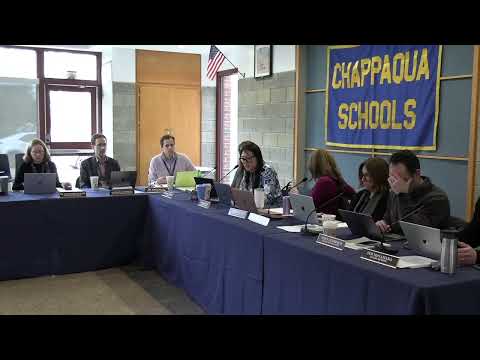
Chappaqua district outlines pre-K expansion; RFP bids will determine whether district pays start-up costs
Summary
Administrators presented startup and recurring-cost estimates for a four-classroom pre-K expansion and modeled three RFP-bid scenarios showing the district's out‑of‑pocket exposure depends on agency bid rates and final state reimbursement; the RFP is due after spring break and the program is contingent on state budget approval.
Administrators and budget staff presented the Chappaqua Central School District's plan for a pre-K expansion and three RFP scenarios that will largely determine whether the district must cover first-year start-up costs.
Josh, the district's budget presenter, said the district estimated total start-up costs of $90,300 to prepare four classrooms (furniture, classroom libraries and large displays) and projected annual operating costs of roughly $130,540 for six sections (including a curriculum subscription and portions of staff salaries and benefits). He said the state currently reimburses about $5,500 per pre-K student for 2025–26 and the governor's proposed budget would increase that reimbursement to $10,000 per student in 2026–27, but staff cannot assume that number is final because the legislature must approve the state budget.
To illustrate how agency bid proposals will affect the district, administrators modeled three RFP outcomes. Under a low or mid-range agency bid, the district's analysis showed the grant funding could cover start-up costs and recurring operating expenses so the district would have no ongoing net cost. Under a higher-bid scenario (about $9,000 per student in the district's example), the district would expect roughly $72,000 of start-up expense in year one; subsequent years could be cost-neutral if grant reimbursements and agency charges stabilized differently.
Administrators emphasized the modeled scenarios are illustrative. "The state reimburses us about $5,500 per student in 25–26. The proposed is to reimburse us $10,000 per student in 26–27," Josh said, adding that the district does not yet know how agencies will price their services in response to the RFP. He said the district's evaluation will not default to the lowest-cost bid; the selection process will include interviews and a rubric designed to weigh quality and staffing.
The presentation also described an anticipated director-level role to support implementation and curriculum fidelity from pre-K through grade four. Administrators said the program design aligns with New York State early learning standards and the district's internal limits on screen time for pre-K (district practice aims to keep screen exposure within the state guidance cited in the presentation).
The board pressed administration for timing: staff said the RFP was released several weeks before the March 25 session and proposals are due after the district returns from spring break. The board will consider budget adoption at its April 8 meeting; administrators said final federal/state funding and agency proposals will determine the district's financial obligation.
Next steps: the district will evaluate RFP responses using a rubric that considers staffing and quality as well as price, inform the board of recommended awards, and return to the April 8 meeting as the board finalizes the proposed budget.
Ending: The board did not take a purchasing action during the work session; the RFP process and the state budget timetable will determine whether the pre-K expansion requires any district general-fund contribution.