Get Full Government Meeting Transcripts, Videos, & Alerts Forever!
Get email alerts on the Land Use Development topic
No spam. Unsubscribe anytime.
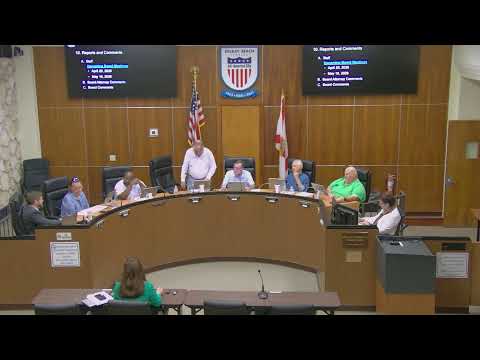
Delray Beach planning board backs 24‑hour freestanding ER at West Atlantic site, with conditions
Summary
The Delray Beach Planning & Zoning Board voted 6‑0 on March 16 to recommend the city commission approve a conditional‑use permit allowing a 24‑hour freestanding emergency department (FSED) at 3921 West Atlantic Avenue, subject to conditions requiring building orientation and landscaping consistent with the applicant’s conceptual site plan.
The Delray Beach Planning and Zoning Board voted 6‑0 on March 16 to recommend the City Commission approve a conditional‑use permit allowing a 24‑hour freestanding emergency department at 3921 West Atlantic Avenue, subject to conditions requiring conformance with the applicant’s conceptual site plan, placement of the ambulance entrance on the Atlantic Avenue side, and installation of the proposed landscaping buffer.
John Roach, an in‑house planner for the applicant, told the board the revised plan relocates the structure about 23 feet south and rotates the building so ambulances enter from West Atlantic Avenue. "There will be approximately 393 feet of separation between the closest point of our building ... and the closest residential unit within High Point," Roach said, and the applicant has increased a parking‑lot landscape buffer to roughly 50 feet and proposed specimen live oaks and hedging along the High Point property line.
Rebecca Dosser, principal planner in Development Services, summarized the code standard that requires conditional‑use review for any 24‑hour business within 300 feet (measured parcel‑to‑parcel) of residentially zoned property. She cited staff estimates in the record: "The anticipated increase in trips is 271 per day, 17 peak hour, and they're anticipating 1.1 to 1.2 ambulances a day." Dosser said the board must find that the use will not have a significantly detrimental effect on neighborhood stability, is consistent with the comprehensive plan, and includes adequate security and buffering.
Deputy Fire Chief Travis Franco answered operational questions and described local practice on sirens: "We have to keep them on while we're on the main roadways, but once we turn it to the parking lot, it goes off," he said, and noted that critical patients might occasionally be taken to an FSED when clinically appropriate.
Residents and stakeholders urged the board to deny the request. Lori Vineor, president of the Alliance of Delray and a member of Delray Medical Center’s board of governors, asked the board to reject the late‑night approval and said the applicant’s ambulance estimates were drawn from different demographics. "Freestanding EDs are not generally found midblock and behind bedrooms of residents," she said, and urged the board to "please deny this application." High Point residents and their counsel described broad local opposition and raised concerns about noise, traffic, and the need for an additional emergency facility so close to Delray Medical Center.
Cardiologist Eric Lieberman, who identified himself as on staff at Delray Medical Center, told the board he was concerned about potential delays if patients first present to a freestanding ER and later require transfer to a full hospital for advanced interventions. "Time is muscle," Lieberman said, summarizing the medical concern about treatment delays for heart attacks and stroke.
Applicant attorney Brian Seymour emphasized the limited scope of the board’s action: "This conditional use doesn't generate the traffic," he told the board, noting that the underlying medical‑clinic use is allowed in the zoning district and that the conditional review is limited to the late‑night component.
Board members debated whether the application met the LDR findings and whether the applicant’s concessions — the building rotation, increased buffers and commitments in the conceptual site plan — were sufficient to mitigate neighborhood impacts. After an initial vote, the board reconsidered to attach conditions requiring the landscaping, building orientation, and ambulance entrance location be implemented consistent with the conceptual site plan presented that evening. The board’s recommendation is advisory; the City Commission will make the final decision.
Next step: the conditional‑use recommendation will be transmitted to the City Commission for consideration; the applicant will later submit a level‑two site plan and any required permits or variances for further public review.