Get Full Government Meeting Transcripts, Videos, & Alerts Forever!
Get email alerts on the School Closures topic
No spam. Unsubscribe anytime.
Vallejo superintendent cites $32 million shortfall and advance plan to study seven schools; parents and teachers urge alternatives
Summary
Superintendent Ruben Aurelio told a packed town hall the district must 'right-size' after years of enrollment decline and a projected $32 million in cuts, and presented a December timeline for seven closure-related resolutions; community members — especially at Cooper, Federal Terrace and Penny Cook — urged alternatives and pressed for transport, special-education and staffing plans.
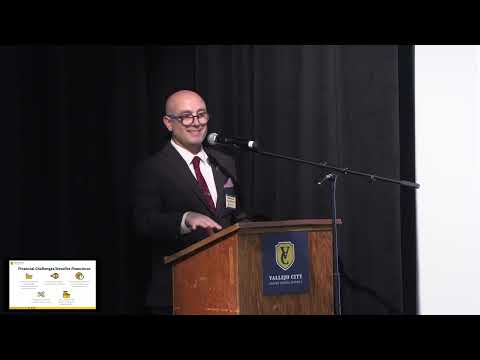
Superintendent Ruben Aurelio opened a town-hall meeting to explain a phase-two review of seven schools in Vallejo City Unified, saying the district faces a structural budget gap that could require campus consolidations.
"I didn't come to be the superintendent to close schools," Aurelio said, but he told attendees that declining enrollment and the end of pandemic-era funding have left the district projecting roughly $32 million in reductions over the next two years. He said district enrollment has fallen from the district's earlier highs to about 9,600 students, and that the district currently uses roughly 51% of available classroom space.
Aurelio said the governing board asked for an equity impact analysis, which the district will present in final form at the regular board meeting tomorrow; accepting that report, he emphasized, is not itself a decision to close schools. He also said the board will consider seven separate resolutions — one for each school under review — and is scheduled to decide on whether to close, leave open, or relocate programs at the Dec. 17 board meeting.
The superintendent framed the fiscal choices in plain terms: California funding follows students and daily attendance, and the district's average daily attendance has hovered near 89%. "When a family leaves our district, we lose somewhere between 14 and 16–17,000 per pupil," he said, describing how transfers and the end of one-time COVID funds widened the budget gap.
District staff described the summer "7‑Eleven" committee that analyzed the seven sites, and said the equity impact analysis examined transportation, racial and demographic indicators, and program impacts. The district also said special-education services mandated by students' individualized education plans would continue even if a classroom relocates.
Community members and staff responded with emotional testimony. "I see us pitted against each other," said longtime district employee Lori Tackmire, who urged a VCUSD-first approach rather than site-by-site competition. Cooper families, staff and volunteers turned out in large numbers: Cooper teacher Rachel Zamgo told the room that many students uprooted by prior closures had taken months to adjust and said, "This is my second time to beg. Please ... make your decision not through the lens of spreadsheets and numbers but on the lens of the children and the families whose lives will be affected."
Parents raised practical concerns that staff said are central to planning: transportation for families who currently walk to neighborhood schools, continuity of after-school and expanded-learning programs, and how special-education services would be provided if classrooms move to a different campus. An online commenter asked specifically, "How will you provide transportation for students who live far from the schools that are open?" District staff said the equity report modeled routes and that transportation is a top planning priority; they also said the district is investing non-general-fund dollars and creating a bus-driver training pipeline to expand capacity.
Other speakers stressed community identity and historical ties. One resident said Lincoln Elementary — founded more than a century ago, the resident said — also has literacy programs and strong neighborhood ties, and argued the fiscal savings from closing that campus would be small in the context of a roughly $200 million budget.
School leaders and PTA members noted recent investments aimed at strengthening sites. Laura Iriardi, a kindergarten teacher at Cooper, cited Measure S improvements — new playground structures, restroom and roofing work — and a newly awarded community-schools grant the site had received this year. A parent-volunteer said Cooper had just won what she understood to be a multiyear community-schools grant that could bring substantial resources to the campus.
District leaders outlined the procedural steps that follow any board decision: seniority lists and collective-bargaining rules will guide teacher reassignments, HR will manage transfers, and the district will finalize transportation and program staffing plans after a resolution is adopted. Officials acknowledged earlier closures had been handled poorly and said an accelerated December decision timetable was intended to allow more time to plan and avoid the rushed, disruptive moves families described from earlier years.
Several speakers asked whether selling or surplusing properties could leave the district unable to meet future growth; the district replied that bond and capital restrictions limit which sites can be sold and that even after consolidation the district would retain room to grow.
Aurelio closed by asking the community to remain engaged and said the district will present the equity analysis at the next regular board meeting and hold a study session on Dec. 10; the Dec. 17 board meeting will be moved to a larger venue to accommodate anticipated public turnout.
No formal votes were taken at the town hall. The governing board is scheduled to consider resolutions tied to each of the seven schools at its Dec. 17 meeting.