Get Full Government Meeting Transcripts, Videos, & Alerts Forever!
Get email alerts on the Democracy topic
No spam. Unsubscribe anytime.
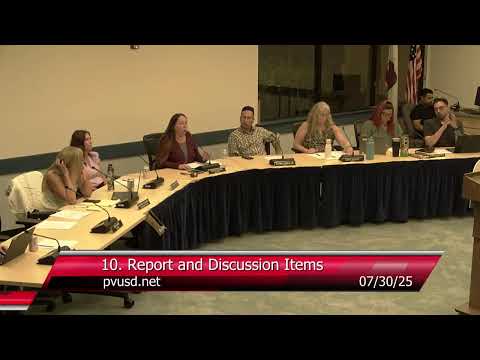
Board forms ad hoc committee to explore lowering schoolboard voting age after student advocates press the issue
Summary
Trustee Medina’s proposal to study lowering the local schoolboard voting age to 16 prompted substantial student testimony. The board appointed an ad hoc committee to research legal, operational and outreach steps, citing Oakland and Berkeley as models.
The board voted on July 30 to form an ad hoc committee to explore lowering the district’s schoolboard voting age to 16, after multiple student speakers and community advocates urged the change.
Trustee Gabriel Medina introduced the item as a campaign promise to increase student civic participation. Dozens of students and young people addressed the board in support, saying a voting age of 16 would let those most directly affected by schoolboard decisions hold officials accountable and spur civic engagement. “As a 16‑year‑old, I know it would be a gamechanger to be able to vote for board members because I remember having to fight really hard just to be able to support people who represented me,” a student said.
Trustees and staff noted legal and operational steps required for such a change. The board packet and several public commenters referenced the Oakland and Berkeley measures as precedents: those jurisdictions combined city and school processes and coordinated with county registrars to add eligible voters for schoolboard contests. District staff also warned the board that local city charters, county boundaries and registration rules can complicate implementation and that the effort may require several years and legal coordination.
After discussion, trustees appointed an ad hoc committee (Trustees Medina, Turley and Krasco) to research timelines, costs, legal constraints, and community engagement. Staff and trustees said the committee will reach out to districts that have already lowered the voting age and to the county registrar for procedural guidance.
What’s next: The committee will report back with a recommended timeline, legal analysis and a community‑engagement plan. Trustees noted implementation could take multiple years and would require careful coordination with county election officials.
Quote: “Students should be allowed to make decisions that directly affect their education,” one student speaker told trustees. “We are affected by the decisions of the board members who we don’t even get to elect.”
The board’s action creates a formal avenue to evaluate legal, logistical and policy implications rather than an immediate change in eligibility for upcoming elections.