Get Full Government Meeting Transcripts, Videos, & Alerts Forever!
Get email alerts on the Water And Wastewater topic
No spam. Unsubscribe anytime.
Livingston Parish committee backs new water-oversight draft and pushes for wastewater planning
Summary
At its March 9 meeting the Livingston Parish Master Plan Review Committee reviewed a draft parishwide water-oversight proposal, discussed sewer capacity limits and the need for a wastewater master plan, and agreed to pursue expert briefings and community education while amending bylaw language to reference the 'Livingston Parish Master Plan 2025.'
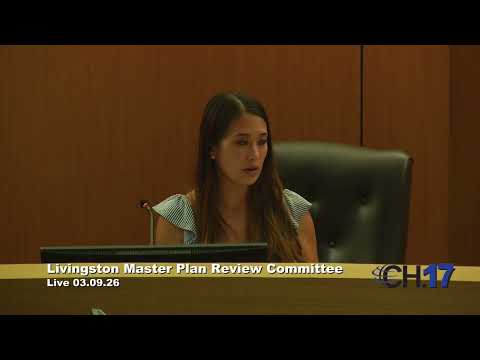
The Livingston Parish Master Plan Review Committee on March 9 reviewed a working proposal to create a parishwide water-oversight committee and urged the parish to accelerate planning for wastewater infrastructure as treatment needs rise.
Mr. Burgess, who distributed a draft working document, summarized a proposed DW1 policy that would establish coordination, performance transparency and standardized reporting across local potable-water systems. "This is not to make a parish-wide system," Burgess said, "this is like the small steps and direction to start getting this put together." He recommended a committee makeup including parish public works, parish administration, the Louisiana Department of Health representative, water associations and emergency management, with an initial set of actions in the first three to 12 months to convene departments, adopt a charter and develop reporting templates.
Committee members said the proposal is intended to supplement, not replace, existing water boards by sharing best practices and improving accountability. One member noted that a low public-health grade (for example a D) currently triggers fines but not immediate emergency action; the committee said the oversight body should increase awareness and follow-up without creating undue enforcement beyond the parish's authority.
The meeting also turned to wastewater. Committee members said the parish currently maintains roughly 7.5 million gallons per day (mgd) of treatment capacity and that materials in the master plan project capacity needs could double by 2030. Members warned that widespread reliance on septic systems may appear cost-effective in the short term but can create long-term environmental and public-health risks if systems are improperly maintained or noncompliant.
Because the parish is already undertaking several master-plan efforts, members proposed a two-track approach: press the parish administration to prioritize a formal wastewater master plan while the committee begins public-education work now. Suggestions included creating a community knowledge base, social-media outreach and text alerts to inform residents about long-term costs and risks versus the benefits of centralized systems.
To inform future recommendations, the committee agreed to hold a topic-focused meeting inviting wastewater district operators and parish staff to present current projects and lessons learned. Members mentioned a recent pump expansion in district areas and a mechanical plant at the Buddy Ellis site as examples of ongoing local work.
Votes at a glance: The committee adopted the February minutes by voice vote and later approved a bylaws wording change to rename the committee's CMP reference from "Envision Livingston" to "Livingston Parish Master Plan 2025." The transcript records affirmative voice votes but does not provide an individual roll-call tally for the bylaw amendment.
What comes next: Committee members will collect feedback on Burgess's draft and plan a focused meeting with district operators and parish staff. They will coordinate whether committee reports should route to the Planning Commission first and then to the parish council to ensure orderly review.