Get Full Government Meeting Transcripts, Videos, & Alerts Forever!
Get email alerts on the School Safety topic
No spam. Unsubscribe anytime.
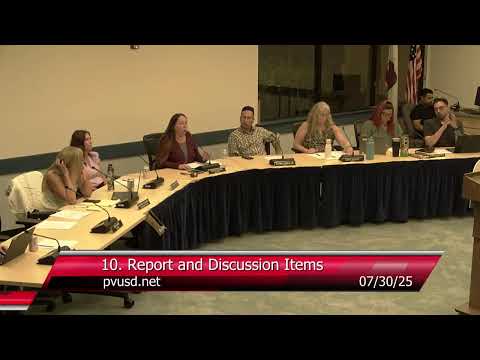
Board hears hours of testimony on proposed SRO memorandum; community divided
Summary
A draft memorandum of understanding pairing School Resource Officers with on‑site mental‑health clinicians drew extensive public comment. Supporters cited safety and relationships; critics urged more counselors, detailed guardrails, and stronger complaint and termination rules.
District staff presented a draft memorandum of understanding (MOU) on July 30 that would pair School Resource Officers (SROs) from Watsonville Police and the Santa Cruz County Sheriff’s Office with on‑site mental‑health clinicians at district high schools.
Interim Director of Student Services Heather Gorman described the MOU as a framework to “define the role of the SRO, outline required training and establish monitoring systems to assess their effectiveness.” She said the proposed approach centers restorative practices, limits SRO involvement in day‑to‑day disciplinary matters, and pairs SROs with clinicians so the district’s response prioritizes “calm, connection, and recovery.”
Proponents said trained officers can help keep campuses safe and build relationships with students. “Without them meeting with kids on a regular basis, the kids never get a chance to understand that,” one supporter said during public comment.
But the MOU prompted sustained public criticism from parents, teachers, union representatives and students who urged the board to invest in counselors and restorative programs rather than policing. Critics repeatedly asked that the district add precise, enforceable restrictions to the MOU, including: explicit lists of prohibited SRO activities; a requirement that parents be notified and present before an officer questions a minor (except documented emergencies); mandatory, verifiable training records; strict documentation of any SRO‑student encounters; rapid timelines for complaint investigation and public reporting; and automatic termination triggers if training or trust standards are not met.
Several speakers said the draft was too vague. “A point of contact is not a system,” one community member said, urging the board to adopt a formal complaint process with timelines and an impartial review panel. Others cited national audits and local incidents in which student interactions with police were not fully documented.
District staff and trustees said the MOU is a draft intended to create guard rails and to be adjusted with community input. Gorman said the district plans to collect disaggregated data and conduct periodic reviews tied to a public reporting schedule.
What’s next: The item was presented as a discussion item; the board did not take final action on the MOU at the meeting. Trustees asked staff to refine language, add clearer documentation and complaint processes, and return with a revised draft. Several trustees requested more detail on how restorative practices would operate in concrete, step‑by‑step terms and on what data the district would publish and how often.
Quote: “This memorandum begins a process of critically examining and defining the impact of both SROs and mental‑health clinicians in our schools,” Heather Gorman said. “Our focus is on relationships, well‑being and belonging.”
The debate highlighted a continuing local divide about policing in schools and competing priorities for limited district resources.