Get Full Government Meeting Transcripts, Videos, & Alerts Forever!
Get email alerts on the Governance topic
No spam. Unsubscribe anytime.
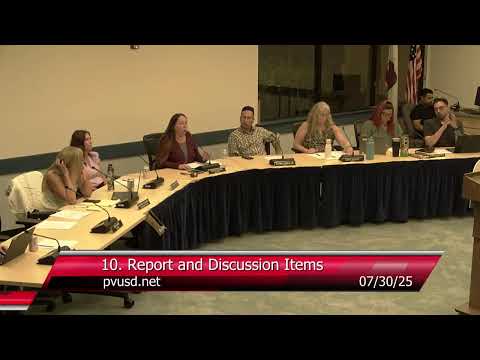
Board rejects 'no confidence' motion after extended public testimony and trustee debate
Summary
After two hours of public testimony and trustee debate, the Pajaro Valley Unified School District board defeated a motion calling for a vote of no confidence in board leadership. The item drew sharply divided community testimony about governance, trustee conduct and district priorities.
The Pajaro Valley Unified School District board defeated a motion related to a vote of no confidence in its leadership after an extended public‑comment period and prolonged debate at its July 30 meeting.
Trustee Gabriel Medina, who placed the item on the agenda, framed the motion as a response to “a sustained pattern” of conduct he said undermined transparency, fairness and public trust. He told the board he had submitted agenda requests since January because he believed the leadership had “abandoned transparency, fairness and core values of public service.”
Supporters of the board leadership urged trustees to reject the motion as a distraction from the district’s pressing academic and budget challenges. “Of all the things that we should be talking about — the budget, closing schools, declining enrollment, improving academic performance — we’re here to consider a no confidence vote,” said longtime community member Bill Beecher during public comment, calling the item “a waste of time.” Several members of the public echoed that position, saying the governing body should focus on student outcomes and staffing.
Other community members strongly urged action on governance and decorum. Dozens of public speakers criticized what they described as repeated instances of disrespect and said the board needed stronger accountability mechanisms. One student speaker urged trustees to act to protect programs and services students depend on.
After debate, the board voted. The motion to proceed with a vote of no confidence failed. The transcript documents the board’s roll‑call and the chair declared the motion unsuccessful; the exact roll‑call tally is not clearly reported in the transcript recording.
The failure of the motion does not end the wider governance debate. Trustees said the board will continue with planned governance work, including a two‑year implementation timeline tied to recent Effective School Boards training. Several speakers and trustees said they want clearer procedures for agenda setting and for how individual trustees’ requests are handled, and some asked for more timely, transparent responses to information requests.
What’s next: trustees agreed to pursue the governance timeline approved in the same meeting and to continue working with consultants and staff on improved agenda processes and community outreach.
Quote: “This vote of no confidence is not just a reaction. It is a necessary correction,” Trustee Medina said, urging colleagues to consider his long‑standing complaints about agenda access and confidentiality in legal matters. “When board leadership refuses to respect its own members, fails to uphold public trust, and is governed by fear and favoritism, we must act.”
The board’s immediate procedural action after the vote was to move to the next agenda items, including discussion of meeting schedules and adoption of the governance implementation timeline.