Get Full Government Meeting Transcripts, Videos, & Alerts Forever!
Get email alerts on the Transit Overlay Development topic
No spam. Unsubscribe anytime.
Planning commission denies McDonald’s conditional‑use permit for Baseline/ Sierra site after debate over transit‑oriented goals
Summary
After extensive public testimony and commissioner debate about transit‑oriented development and public‑health tradeoffs, the San Bernardino Planning Commission voted 3–2 to deny a conditional‑use permit for a 24/7 McDonald’s with dual drive‑through lanes at West Baseline Street and North Sierra Way.
The San Bernardino Planning Commission on a 3–2 vote denied a conditional‑use permit (CUP 25‑02) and related subdivision and parcel‑map requests for a proposed McDonald’s at West Baseline Street and North Sierra Way, after extended public comment and commissioner questioning.
Staff presented the project as a consolidation of six parcels totaling roughly 0.75 acres to support a 3,684‑square‑foot McDonald’s with dual drive‑through lanes, 25 on‑site parking stalls (the transit overlay minimum is 13), and plans to operate 24 hours a day. Staff said the applicant provided a noise study projecting exterior levels near the order board would be below the city threshold (65 dB) and offered a two‑phase drive‑through stacking contingency that would station staff on site to manage overflow.
McDonald’s area construction manager Scott Wilkerson and project consultant Zan Ununice described extensive coordination with staff and suggested the project would create 60–100 jobs, many of which the team said would be filled by local residents and public‑transportation users. Civil engineer Hannah Levano described driveway movements, proposed signage and no‑U‑turn restrictions intended to reduce unsafe maneuvers.
Opponents, including community members Robert Cillo and Evette Romero, urged the commission to consider the transit‑oriented development (TOD) overlay’s intent and the city’s housing priorities. Robert Cillo, a developer, warned that a single‑story, auto‑oriented drive‑through could “lock in low‑intensity land use for decades” on a corridor intended for higher‑density, mixed‑use development. Public‑health advocate Evette Romero cited city data showing far more fast‑food and convenience outlets than full‑service grocery stores and argued that additional drive‑throughs reinforce unhealthy food environments.
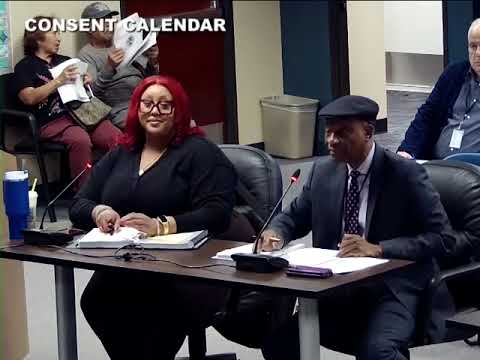
Commissioners split along policy lines. Several members stressed that the TOD overlay allows drive‑throughs only by discretionary permit and that the commission must weigh neighborhood impacts and long‑term corridor goals. After an initial motion and vote, an alternative motion to deny the staff recommendation passed 3–2. Commissioners asked staff to memorialize the denial findings for the record; staff reminded the applicant of a 15‑day appeal window to the city council.
The denial does not on its face bar a future application on other parcels or a revised proposal that better aligns with TOD objectives or provides different design and programmatic commitments.