Get Full Government Meeting Transcripts, Videos, & Alerts Forever!
Get email alerts on the Budget topic
No spam. Unsubscribe anytime.
Clay County faces large CIP shortfall as commissioners flag public-safety radio replacement
Summary
County staff presented a proposed sixth-year addition to the capital improvement plan that would add about $41 million in projects amid a growing funding gap; commissioners focused on potential radio-system replacement costs, stormwater shortfalls and options to use mobility/impact fees or bonds to close the gap.
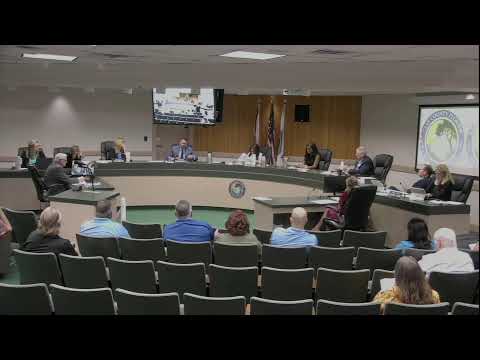
Clay County commissioners reviewed the proposed sixth year of the county’s capital improvement plan on March 10, as staff warned of a major funding gap and urged the board to set priorities for projects that currently lack stable funding.
Budget staff told commissioners the slide deck focuses on projects that have funding in the next six years and that, if unchanged, roughly $41 million in work would be added in year six. Staff said revenue sources include sales and gas taxes, grants, mobility and impact fees, and bond proceeds; they cautioned that a recent bond issuance largely drove a sharp change in the county’s reported carryforward balance.
The meeting turned to public safety when commissioners flagged a large radio-infrastructure item on the unfunded list. Commissioners said a line item on the draft list appeared as $52 million, alarming several board members and prompting questions about need, timing and cost-sharing arrangements with the school board. Budget staff later characterized the large figure as a typographic error and said the intended figure for a new site was on the order of $5.2 million, while stressing additional maintenance and lifecycle costs remain.
Dean Hay, Clay County MIS director, told the board the county has already completed several tower upgrades and is replacing core controller equipment, but other system components — dispatch consoles, base stations and portable radios — will reach end of life on staggered timelines and will require replacement or phased upgrades. “We have done nothing but add to the system,” Hay said, and urged planning for lifecycle replacements rather than waiting until equipment fails.
Commissioners raised procurement and cost-sharing questions. One commissioner suggested revisiting prior agreements that limited school-board contributions to the system and recommended scrutinizing sole-source or vendor-lock-in risks; Hay said staff had negotiated discounts on some work and is working with the vendor to manage costs.
Stormwater funding was another recurring concern. Commissioners noted the CIP currently shows $400,000 for stormwater in the near term while a stormwater study recommended roughly $5 million for maintenance; staff said many stormwater projects remain on the unfunded list and that options include implementing a stormwater fee or reallocating other revenues. Staff also reminded the board that impact-fee dollars must be spent in the district where they were collected and that the county has an eight-year window to obligate funds after receipt.
Mobility fees also fell short of listed road needs: staff said projected mobility-fee revenue across districts will generate roughly $20 million over the five-year window while identified road needs on the unfunded list are near $70 million, forcing the board to confront whether to reprioritize projects, increase fees or seek other revenue sources.
Staff outlined next procedural steps for the budget cycle: a follow-up operational/budget workshop on June 9, a potential post-legislative workshop in late spring if needed, and a July workshop before any final millage decisions. The board did not take formal votes on CIP adoption at the workshop; staff said the materials are to inform priorities as they prepare the budget for future adoption.
The county manager and budget staff asked commissioners for guidance on projects they feel strongly about so staff can reflect those priorities in the coming budget materials.