Get Full Government Meeting Transcripts, Videos, & Alerts Forever!
Get email alerts on the Humanitarian Crisis topic
No spam. Unsubscribe anytime.
UN spokesperson updates on Sudan, Lebanon, Gaza and Ukraine as funding gaps hinder relief
Summary
The United Nations warned of worsening humanitarian needs in Sudan and Lebanon, reported UNIFIL peacekeeper injuries in Lebanon, said water access was restored in southern Gaza after an attack, and described fresh casualties and displacement in Ukraine; the UN flagged major funding shortfalls for relief plans.
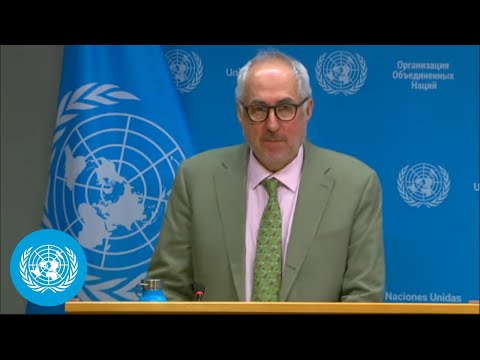
The United Nations spokesperson delivered an update covering multiple crises, urging de-escalation, protection of civilians and immediate funding to support relief operations.
The spokesperson said the Secretary-General’s personal envoy for Sudan, Pekka Haavisto, is pursuing talks across the region, including meetings with the Rapid Support Forces’ leader General Mohamed Hamdan Hemeti and General al-Burhan of the Transitional Sovereign Council, to explore “practical avenues for de-escalation and the continuing protection of civilians.” UN teams are scaling up operations in Khartoum, and Denise Brown, the resident and humanitarian coordinator, is returning to Khartoum with a core team to expand humanitarian delivery as needs rise.
The briefing highlighted intensive risks to civilians: the spokesperson said more than 1.6 million people have returned to Khartoum in recent months while explosive remnants and damaged infrastructure continue to pose serious threats. The spokesperson also flagged an attack on al-Jabalain Teaching Hospital in White Nile state that reportedly killed 10 health workers and injured 22, and cited World Health Organization figures that more than 200 attacks on health infrastructure have been verified since the conflict began. “Medical personnel and facilities must be protected as international humanitarian law requires,” the spokesperson said.
Funding shortfalls for Sudan’s 2026 humanitarian needs and response plan were underscored: the plan requires $2.9 billion to reach more than 20 million people but was reported at roughly 16% funded, with about $465 million in the bank.
On Lebanon, the UN said more than 1.1 million people are now registered as displaced and roughly 137,000 people are sheltering in nearly 700 collective sites, many in schools. UNICEF has supplied more than 280,000 liters of fuel to about 45 pumping stations and wastewater sites and helped repair damaged supply lines, but insecurity and damaged infrastructure are hampering access to basic services. The spokesperson warned that less than $100 million of a $308 million March appeal for Lebanon had been received and urged donors to fund the response.
The briefing also addressed UNIFIL operations: the mission reported exchanges of rocket and artillery fire, airstrikes and clashes in parts of southern Lebanon; an explosion inside a UN position injured three peacekeepers (two seriously), who were medevaced to a hospital in Marjayoun and were later reported in stable condition. The spokesperson said Israeli forces had destroyed surveillance cameras outside UNIFIL’s Naqoura headquarters and that the UN had conveyed “serious concerns” to the Israel Defense Forces about force-protection equipment.
In Gaza, OCHA and UNICEF reported restoration of clean-water access in the south after a March 25 airstrike had reduced a desalination plant’s output to below 20% capacity, leaving about half a million people in parts of Deir al-Balah and northern Khan Younis unable to fully access drinking water until repairs and trucking operations were resumed.
Turning to Ukraine, the spokesperson said intensified attacks over the weekend killed 42 people, including a child, and injured about 200 others while damaging health, education and energy facilities and displacing more than 25,000 people from Donetsk region so far this year. Matthias Schmale, the UN humanitarian coordinator for Ukraine, stressed that “residents must be protected as they go about their daily lives” under international humanitarian law.
The briefing closed with an announcement that the third session of the Preparatory Committee for the entry into force of the BBNJ agreement concluded with renewed commitment; the first meeting of the conference of the parties is scheduled for Jan. 11–22, 2027.
During questions, reporters pressed the spokesperson about an online post attributed to former President Trump threatening attacks on infrastructure if the Strait of Hormuz is not opened. The spokesperson said the Secretary-General was alarmed by the rhetoric and reiterated that attacks on civilian infrastructure would violate international humanitarian law. When asked whether such attacks could constitute war crimes, the spokesperson said violations of international law would occur and that whether an act is a crime would be a matter for the courts to decide.
The briefing then transitioned to a guest appearance by Francisco Pichon, the UN resident coordinator in Cuba, who joined on screen to begin a separate briefing on Cuba.