Get Full Government Meeting Transcripts, Videos, & Alerts Forever!
Get email alerts on the Monetary Policy topic
No spam. Unsubscribe anytime.
Federal Reserve holds rates steady as chair warns oil shock, tariffs cloud outlook
Summary
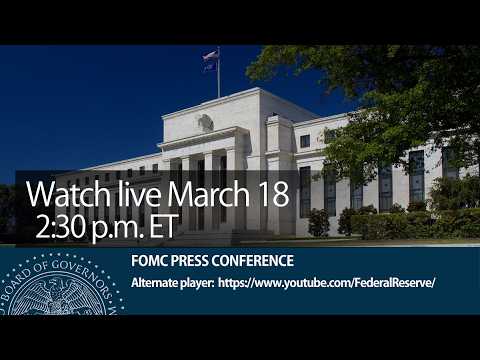
After an FOMC meeting, the Federal Reserve left its target federal funds range at 3.5%–3.75% and said it will monitor the uncertain effects of higher oil prices and tariff-driven goods inflation before adjusting policy. Officials cited slow progress on core inflation and a median SEP projecting 2.4% GDP growth and 4.4% year-end unemployment.
The Federal Reserve announced after its meeting that the Federal Open Market Committee will keep the target range for the federal funds rate at 3½ to 3¾ percent, saying the current stance remains appropriate while officials monitor risks from higher energy prices and tariff-driven goods inflation.
The chair said, “Today, the FOMC decided to leave our policy rate unchanged,” and added the committee “will remain attentive to risks to both sides of our dual mandate.” The chair framed the decision as conditional on incoming data and progress on disinflation outside the energy sector.
Why it matters: officials said inflation has eased from its 2022 highs but remains above the Fed’s 2% objective. The committee cited recent readings showing total PCE inflation at 2.8% over the 12 months to February and core PCE (excluding food and energy) at about 3.0%. The median participant in the Summary of Economic Projections projects real GDP growth of 2.4% this year, 2.3% next year, and a median unemployment rate of 4.4% at year-end.
On the outlook, the chair warned that events in the Middle East have raised oil prices and introduced uncertain near-term inflation pressures. Asked whether the Fed should “look through” energy-driven inflation, the chair said that looking through depends on evidence of progress in goods inflation and on longer-run inflation expectations remaining firmly anchored. “The question of looking through when it does arise will be one to approach not lightly,” the chair said.
Committee dynamics: officials’ individual projections remain dispersed. The chair said some participants reduced the number of expected cuts this year, while the SEP’s median path for the federal funds rate remains conditional on economic performance. The chair described the committee as balancing lingering upside inflation risks (including from tariffs and energy) against downside risks to employment.
On labor markets, the chair noted modest job gains and a stable unemployment rate near 4.4%, with some reporters pointing to negative monthly revisions in payroll data. The chair said it is unclear whether employment or inflation is the larger near-term risk and emphasized uncertainty in the incoming data.
Communications and governance: when asked about a review of Fed communications and the Summary of Commentary on Participants’ projections (SCP), the chair said the committee considered changes but did not adopt major new communication policies because no proposal attracted broad support. On succession, the chair confirmed that if a successor were not confirmed by the end of a chair’s term, the current chair would serve as chair pro tem until a successor is confirmed.
What comes next: the Fed will watch incoming data closely and revisit the stance at future meetings, noting officials expect to learn substantially more by the next meeting roughly six weeks away. “We will continue to monitor the risks to both sides of our mandate,” the chair said.
Reporting: the press session included multiple reporters asking follow-up questions about tariffs, the effects of oil-price changes on consumption and production, inflation expectations, and the possible implications of higher productivity over the longer run.