Get Full Government Meeting Transcripts, Videos, & Alerts Forever!
Get email alerts on the Education K 12 topic
No spam. Unsubscribe anytime.
Pioneer Elementary outlines goals to lift Hispanic and multilingual learners to 80% growth on STAR
Summary
Pioneer Elementary Principal Alicia Porter told the board the school aims to increase Hispanic/Latino students showing typical or high growth on the STAR assessment from 55% to 80% and multilingual learners from 67% to 80% over a multi-year plan; teachers are using strategies such as Building Thinking Classrooms and targeted pull-out blocks for math intervention.
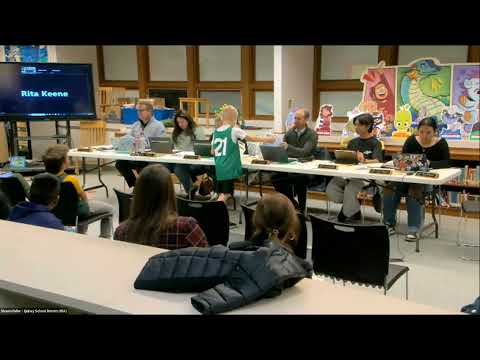
Pioneer Elementary Principal Alicia Porter reported to the Quincy School District Board on Nov. 10 that the school is keeping multi-year targets to raise subgroup growth on the STAR assessment.
Porter said the school’s reading goal is to increase the share of Hispanic and Latino students showing typical or high growth from 55% to 80% and to take multilingual learners from about 67% to 80% over the course of the district plan. “We ended the year making some pretty good growth in ELA where we went from 55 to … 64%” for the Hispanic/Latino subgroup, Porter said, and she reported the multilingual group finished around 66% this year.
The principal and staff explained how the district measures 'growth' using percentile comparisons on STAR and SBA assessments — roughly categorized as low (at or below about the 34th percentile), typical (about the 34th–66th), and high (67th–100th). Porter emphasized that growth metrics track every student’s progress rather than only proficiency benchmarks.
On math, teachers are piloting Building Thinking Classrooms, a collaborative approach that uses vertical whiteboards and student-centered problem solving. Kindergarten teacher Andrea Henry described a lesson she began with a Skittles-based story problem that extended into nearly an hour of engaged math work: “When you go about it, you’re really getting kids from being stagnant and me giving them their responses … to active thinkers of the process,” Henry said.
Porter said the school uses targeted intervention blocks, small-group instruction and regular progress monitoring. She also described attendance outreach procedures — calls after the first absence, letters after three unexcused absences and family meetings after repeated absences — and gave examples of connecting families to social-worker support.
The board commended teachers for conference turnout and the clear presentation of data. Porter said the school continues to track subgroup trends and adjust interventions to close gaps.
The board did not take a formal vote on school goals; the presentation was provided for information and district monitoring.