Get email alerts on the Comprehensive Plan Phase2 topic
No spam. Unsubscribe anytime.
Public testifies split over Seattle Comprehensive Plan Phase 2 zoning changes
Summary
Roughly 50 speakers addressed the Seattle City Council select committee on Comprehensive Plan Phase 2, with many urging either expanded housing and neighborhood centers or protections against displacement and poorly sited upzones; tree preservation and clearer neighborhood-center criteria were recurring themes.
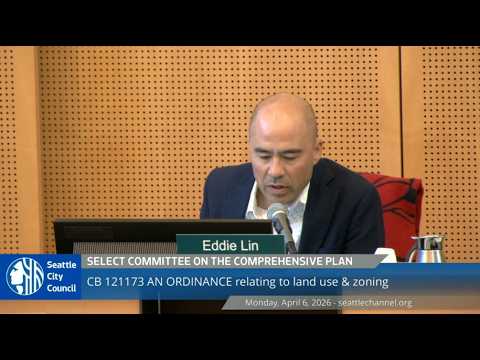
The Seattle City Council select committee opened a public hearing on the Comprehensive Plan Phase 2 zoning amendments and heard roughly 50 one‑minute public comments on the ordinance amending Chapter 23.32 of the Seattle Municipal Code. The hearing, which was recessed until an in‑person session at 3:00 p.m., laid out sharply divided public views on where and how new housing should be added across the city.
Supporters of broader upzoning and expanded neighborhood centers argued the city must add housing supply now. David Hill, a Roosevelt resident, said the neighborhood’s density “works fantastically” and urged the council to “maximize that model everywhere.” Patrick Taylor, a homeowner, called for more housing opportunities and asked the council to pass the rest of the plan promptly.
Opponents focused on displacement, suitability of specific sites and insufficient community process. Multiple speakers—including Bill Scott and several Northeast Seattle residents—urged moving proposed LR‑3 upzones off steep, service‑poor strips such as parts of NE 45th/46th to locations with transit and commercial services to reduce displacement risk. Sarah Davis said the engagement process felt “performative” and warned that rushed changes would produce lawsuits, delays and more displacement.
Environmental and public‑health concerns were also prominent. Speakers including Ruth Williams of Horton Creek Alliance and multiple neighborhood residents warned that more pavement and loss of mature trees could worsen stormwater impacts and heat island effects. Lynn said Seattle had “cut down 1,000‑year‑old trees” in the past year and urged mandatory tree protections. Several architects and planners—including Dylan of the Seattle Planning Commission and Hans Rasmussen—supported design tools such as courtyard bonuses and green‑building height incentives to reconcile tree retention with added housing.
Several commenters raised drafting or criteria questions. Marilyn Smith asked the council to remove “and/or” language in the neighborhood‑center definition so centers require both commercial activity and frequent transit access, not one or the other. Jeff Friedman and others identified site‑specific constraints (split zones, preexisting senior housing) that the current mapping does not appear to address.
Clerks read the ordinance title into the record and opened the hearing; no formal vote was taken during the morning session. The committee recessed at 10:54 a.m. with a promise to continue in person at 3:00 p.m., and the council invited speakers who could not finish to email full testimony to council@seattle.gov.
AI generated
The text on this page is AI generated. Summaries, highlights, analysis, and video transcripts are all produced from the original source material.
AI can make mistakes, so if you spot one, and we will fix it for everyone.
Note: the source content is unaltered by us. Any content source we link to, be it a video, an audio recording, or a document, is presented exactly as its publisher released it. That publisher is usually a government body, sometimes an individual official or another organisation.