Get Full Government Meeting Transcripts, Videos, & Alerts Forever!
Get email alerts on the Search And Seizure topic
No spam. Unsubscribe anytime.
Appeals Court hears challenge to stop, bodycam evidence and 144-packet fentanyl seizure
Summary
In Commonwealth v. Davis, defense counsel said body-worn video and trial testimony cannot be relied on to sustain a motion-to-suppress denial; the Commonwealth said the traffic stop lawfully escalated and troopers’ observations supported probable cause for seizure of 144 fentanyl packets.
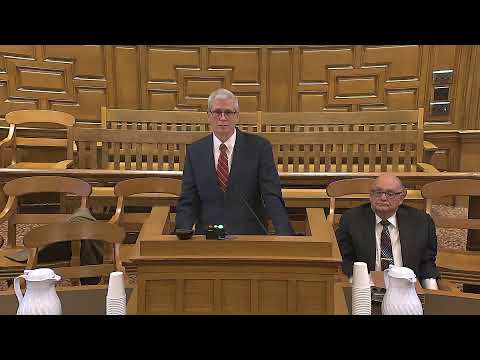
Dan Chicello, counsel for Carl S. Davis, told the panel the record on the motion to suppress cannot be supplemented with trial evidence and the court erred in relying on material not before the suppression judge. He attacked the use of body-worn camera footage that was played at trial but not admitted at the suppression hearing, and argued the trooper’s request that a locked glove compartment be opened lacked the necessary scope justification at the time of the stop.
Justice questions focused on whether the judge may consider evidence adduced at trial when reviewing a suppression ruling and whether the trooper’s request to open a locked glove box exceeded the scope of a traffic stop for a defective tail light. Chief Justice Amy Blake and Justice Chanty Wood pressed defense counsel on the timing and availability of discovery and whether trial counsel’s file actually contained the disputed material.
Assistant District Attorney Cynthia Payne, for the Commonwealth, said the stop was lawful and described the trooper’s training-based observations: once the trooper saw purple wax packets he reasonably inferred drug packaging and the encounter lawfully escalated to probable cause. Payne conceded the prosecutor should have formally offered the bodycam video into evidence at the hearing but urged the court to credit the motion judge’s findings, which the judge said were corroborated by testimony and the footage shown in court.
Why it matters: The appeal raises procedural and evidentiary questions about whether and how appellate courts should review suppression rulings when nonadmitted but played video has informed a motion judge’s factual findings. It also reaffirms contested thresholds for reasonable suspicion-to-probable-cause escalation in traffic stops.
Next steps: The panel took the arguments under advisement.