Get Full Government Meeting Transcripts, Videos, & Alerts Forever!
Get email alerts on the Municipal Budget topic
No spam. Unsubscribe anytime.
Charlottesville council weighs shaving proposed two-cent property-tax hike; staff offer phased transit hires, reserves and other trade-offs
Summary
City staff told council March 19 that a proposed two-cent real-estate tax (from $0.98 to $1.00) would raise about $2.4 million for FY27 but new revenue updates and a suite of one-time reductions—phased transit hires, using city reserves, trimming council initiatives or reverting a schools increase—could reduce or eliminate the increase; several councilors signaled openness to a one-cent compromise ahead of an April 6 hearing and April 9 adoption.
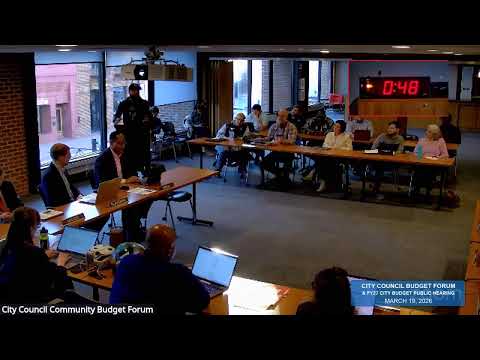
The Charlottesville City Council on March 19 continued debate over the FY27 budget and a proposed two-cent real-estate tax increase that staff estimate would raise about $2.4 million. Staff presented revenue updates and a package of offset options that, combined, could avoid the full two-cent increase but would defer or shift recurring costs into later fiscal years.
City finance staff summarized the general fund at about $279.6 million and said the budget as proposed includes a two-cent increase, moving the rate from $0.98 to $1.00 and producing “just under $2.5 million in new revenue,” according to Miss Hamill, who presented the revenue slides. She said recent collections—stronger sales, lodging and utility tax receipts and other adjustments—added just over $1 million to projected revenue since the budget was proposed.
The staff package identified several levers to close the remaining shortfall (about $1.5 million after the revenue update): phase the Charlottesville Area Transit (CAT) expansion hires (saving roughly $369,000 in FY27 by hiring five drivers in July and five in January and delaying supervisory hires); treat the citywide reserve like the council strategic-initiatives fund and carry forward unspent money instead of adding new one-time funds; reduce the schools’ proposed increase back toward the previously budgeted $2 million (saving about $569,000); and trim council strategic-initiatives allocations (about $109,000). Staff cautioned these are trade-offs that create a structural imbalance that must be addressed in later budgets.
“Those options are not perfect,” Miss Hamill said, adding the phased-CAT scenario “does not sacrifice the improvements that were promoted with this original scenario. It just defers those expenses.” Sam (staff) and other budget staff noted the phased approach will lower FY27 costs but push larger recurring expenses into FY28 when the full-year costs come due.
Council members debated how much risk to accept. Several members said they were open to a one-cent compromise combined with updated revenue numbers and targeted one-time reductions. Councilor Natley said she was “not that keen on the school reduction,” but was open to using the citywide reserve, the strategic-initiatives fund or a one-cent rate if the updated estimates hold. Another councilor said the one-cent option, together with the newly recognized revenue, would reduce the gap substantially (one penny equates to about $228,639 in this presentation).
Other councilors urged caution about repeatedly deferring recurring costs. One council speaker summarized past experience absorbing grant-funded positions and a large wage-and-compensation adjustment, noting those transitions produced a multi-million-dollar, multi-year impact that the city had to plan for.
The staff timeline for the tax-rate process remains: the legal advertisement will publish March 26; an official hearing on the tax rate is set for April 6, and adoption is scheduled for April 9. Miss Hamill reminded council that advertising listed two cents (the legal maximum being advertised) but the council may adopt any lower rate at the adoption vote.
Public comment at the meeting included a landlord and a resident with school-board experience. Jim Moore, who identified himself as a small landlord in Belmont, said he keeps some rents below market but that rising property taxes have put pressure on tenants and landlords; he told council an individual unit’s effective property-tax increase between 2021 and 2024–25 “went up 74% — $1,100 a year,” and urged the council to limit increases to near inflation to avoid displacement. Chris Meyer, speaking as a resident (and saying he serves on the school board but was speaking as an individual), urged the council to prefer progressive rather than regressive tax changes and to pursue non–property-tax revenue opportunities tied to University of Virginia activity and accelerated housing production.
An unnamed representative of the nonprofit Wartime Fitness Warriors described youth-support work and asked the council to consider additional funding for the organization’s programs.
The council did not take final action March 19. Members asked staff for any further revenue updates and signaled they would continue discussions at upcoming work sessions; the tax-rate hearing on April 6 and the adoption vote on April 9 remain the next formal steps.