Get Full Government Meeting Transcripts, Videos, & Alerts Forever!
Get email alerts on the School Budget topic
No spam. Unsubscribe anytime.
Lewiston superintendent outlines $130M FY27 budget, proposes about 30 position reductions and seeks congressionally directed funds for 287 Main St.
Summary
Superintendent Phoenix McLeang told the joint Lewiston School Committee and City Council the FY27 superintendent—budget holds a $130 million spending plan, recommends about 30 position reductions and proposes using $3.5 million in fund balance; members pressed for detail on special-education and grant-funded positions and agreed to consider a joint letter for congressionally directed spending for 287 Main St.
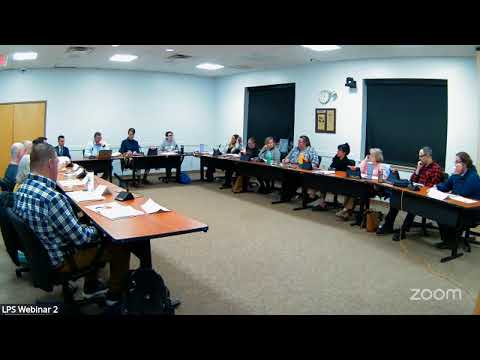
Superintendent Phoenix McLeang on March 16 presented the superintendent's version of the Lewiston Public Schools FY27 budget to a joint meeting of the school committee and city council, outlining a roughly $130 million spending plan, proposed reductions of about 30 positions and a May 12 referendum on the school portion of the budget.
"We are at about 5,400 students currently," McLeang said, summarizing district size and staffing, and added the superintendent's budget includes about 1,112 full-time staff (1,384 total positions including part-time roles). The proposal would use approximately $3.5 million of the district's fund balance and asks voters to approve the school budget in a May 12 referendum after a school committee vote expected May 5.
Why it matters: Committee members pressed for specifics because the proposed reductions affect day-to-day student services. McLeang identified several major cost drivers that shaped the FY27 request: special education costs (an increase the presentation pegged at about $5 million), transportation changes (about $2.5 million), a utilities increase of roughly $742,000 tied to a new contract, workers' compensation increases (about $892,000), and health-insurance budgeting near 14'—5%. Those factors, combined with collective-bargaining salary increases, left the district proposing personnel restructures in an effort to preserve direct student services where possible.
What officials asked and what staff said: Councilors and committee members repeatedly requested more detail on which positions would be cut and how grant-funded roles factor into the reductions. McLeang said his list includes administrative roles (including two assistant principals and a central-office human-resources position), reductions among instructional and support roles (example items: a tech-math position, reductions in instructional coaches for literacy, math and multilingual services, cuts to technology coach positions and possible librarian staffing changes) and an effort to reconfigure some grant-funded jobs as locally funded positions where feasible.
On the trade-offs of moving positions out of grant funds, McLeang said some roles currently paid with title or other federal grants are sunsetting; shifting or absorbing those positions locally may preserve some services but does not fully eliminate costs. "Pulling these folks out of those title funds or other grants will either sunset the position or create more space within the title funds to maintain other intervention efforts," McLeang said.
Special education and tuitioned placements: Multiple members highlighted savings tied to bringing tuitioned students back into district programs. McLeang and Director Craft referenced figures indicating the district has reduced outplacement costs substantially, citing a $6.2 million figure for this year and larger savings projected next year if the strategy continues.
State funding and advocacy: Councilor Luke Jensen urged clearer public communication about the district's long-term funding position, arguing the community has borne capital debt and that state funding formulas have left Lewiston with a disproportionate local tax burden. "We're getting screwed by the state and the feds," Jensen said, calling for joint messaging and possibly a joint resolution from the council and committee to press the state delegation for changes.
Congressional-directed spending and 287 Main St.: McLeang said the district is preparing applications for congressionally directed spending to rehabilitate 287 Main St. as a hands-on 6-8 learning site, and asked whether councilors and board members could sign a brief letter of support because application windows open and close quickly. Several councilors indicated willingness to sign a fast, high-level letter to strengthen the request.
Process and next steps: McLeang said the school committee will continue budget deliberations in additional meetings (two scheduled next week) and that the council's budget calendar requires final timing be aligned with the city's mill-rate information and insurance rates. Committee members asked staff to circulate the full memo and line-by-line spreadsheets that show the proposed reductions and estimated savings.
Procedural note: At the end of the meeting Member Janet Bowden moved to adjourn, seconded by Member Megan Herd; the chair called for those in favor and for opposed. The transcript excerpt provided does not include a clear vote tally in the excerpt.
What remains unclear or to watch: The full list of affected positions and the precise net savings depend on final staffing choices and which grant-funded roles are sunsetting; the district has not yet finalized insurance rates that could change budget math. The district is seeking federal earmark-style funds for 287 Main St.; those applications are time-sensitive and could change the capital plan if funded.