Get Full Government Meeting Transcripts, Videos, & Alerts Forever!
Get email alerts on the Public Safety Cpr topic
No spam. Unsubscribe anytime.
Springfield fire chief urges hands-only CPR after city data shows low bystander intervention
Summary
Fire Chief Jacob King presented 2025 cardiac-arrest data on the city’s Chief Chat, saying Springfield saw 103 cardiac arrests with an overall survival of about 8.7% and that only about 25% of witnessed arrests received bystander CPR; he announced a goal to raise that rate to 40% through outreach and training.
Jacob King, Springfield fire chief, used the department’s Chief Chat podcast to press residents to learn and perform hands-only CPR after the department’s 2025 review found low bystander intervention and correspondingly low survival rates.
“We had 103 different cardiac arrests. 51 of those were witnessed and 28 of them were witnessed by a first responder,” King said, adding that the city’s overall survival rate from those incidents was about 8.7%. He said just about 25% of witnessed arrests locally received bystander CPR, compared with a national bystander-CPR rate of roughly 60 to 65 percent.
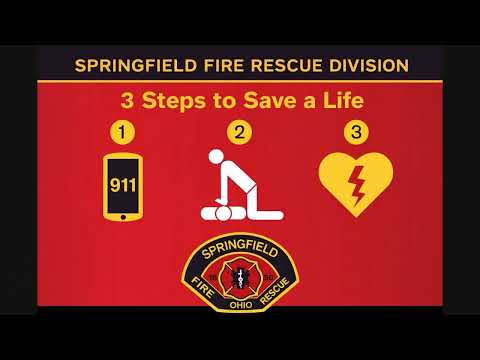
King and Police Chief Allison Elliot framed a public-education push around the hands-only method and AED use. “Call 911, start chest compressions, and ask for an AED,” King said, describing three simple steps he asked listeners to remember. He told listeners the program will promote hands-only chest compressions (about 100–120 compressions per minute, roughly two inches deep for an adult) and dispatcher-assisted instructions.
King said the department is setting a community target to raise the bystander-CPR rate to 40 percent, which he argued could meaningfully increase survival: “If we did 40% bystander intervention and 10% of these cardiac arrests actually received an AED right away … we could have a survival rate of 35%,” he said, describing the projected gain as contingent on more bystander action and AED access.
The chiefs emphasized practical details. King demonstrated technique on a mannequin and advised rescuers to lock their arms, push hard and fast to the beat of a familiar song or a steady count, and swap rescuers regularly to limit pauses. When medics arrive, King said citizens should continue compressions until EMS takes over. Elliot noted that dispatchers are trained to guide callers through compression steps before responders arrive.
King and Elliot also referenced legal protections and partner agencies. King said Ohio’s Good Samaritan protections reduce legal risk for bystanders who render aid; he credited Springfield Regional Medical Center (ER director Noel H. Noel) and the department’s medical director, Dr. Guest, for supporting community outreach and the decision to demonstrate hands-only CPR in the podcast.
The emergency chiefs urged residents to attend local training, learn hands-only CPR, and ensure AEDs are accessible where possible. The podcast segment did not propose a new city ordinance or formal program funding; instead, the chiefs described outreach, demonstrations and dispatcher support as the immediate next steps.