Get Full Government Meeting Transcripts, Videos, & Alerts Forever!
Get email alerts on the Land Use Zoning topic
No spam. Unsubscribe anytime.
Rexburg council keeps one‑acre option, debates sidewalk rules as code rewrite advances
Summary
City staff presented a rewrite of Rexburg's development code and a 11‑year rezoning spreadsheet; council voted to retain the one‑acre RR1 option and directed staff to revise language on 'residential estate' and sidewalk requirements while flagging potential grandfathering and annexation costs.
Rexburg city staff laid out a proposed overhaul of the city's development code during a joint Planning & Zoning and City Council meeting on April 1, stressing changes to residential zone names, minimum lot standards and sidewalk obligations.
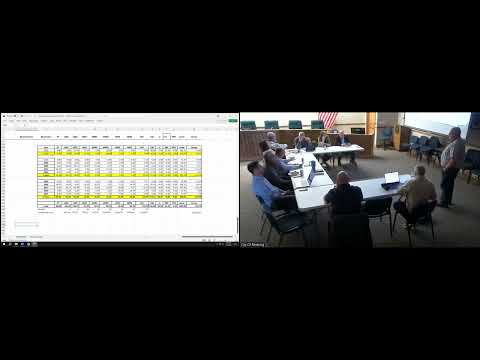
Alan (staff) walked the council through an 11‑year rezoning and annexation spreadsheet showing roughly 1,000 acres rezoned and over 513 acres annexed. He said the dataset helps the city "identify what kind of zoning our citizens are asking for," and framed the rewrite as an effort to align code language with recent development patterns.
The central substantive proposals include removing a small "residential business district" (RBD), consolidating R1 and R2 typologies into a renamed "residential estate" category with a half‑acre minimum, and clarifying where sidewalks and ribbon curb will be required. Staff noted the code will display each zone's comprehensive‑plan designation at the top of its section to reduce public confusion.
Council members raised multiple concerns about costs and equity. Several said mandatory sidewalks on one‑acre or half‑acre lots could impose significant expenses on property owners who would be required to install curbs, gutters and sidewalks when lots are sold or redeveloped. Council member Brianna said the city had previously required sidewalks on some larger lots and that a grandfathering clause — exempting existing homeowners until a sale or major rebuild — might reduce hardship. Others argued that connected sidewalks are important for safety and long‑term city planning.
After discussion, the council took a voice/hand vote to keep RR1 (the one‑acre option) in the code as an available zoning category and agreed to rename R2 to "residential estate two." Council members also asked staff to return with clearer language on grandfathering, when sidewalks would be required, and how annexation of county neighborhoods would be handled so property owners are not surprised by deferred improvement costs.
Alan and other staff also discussed LDR3 (10 units/acre), debating whether to permit it in both low and medium density comp‑plan designations to provide flexibility for townhouse development while preserving single‑family housing options in many neighborhoods. Council signaled a consensus to allow LDR3 in both contexts, but asked staff to show concrete examples and bring building‑permit data to the next review so the council can see how rezones translate into actual housing units.
The council did not adopt the full code rewrite at the meeting; members directed staff to incorporate the suggested edits and return with updated draft language, clearer definitions of minimums and maximums, and an implementation timeline. The item will return for further review and formal readings at a later date.
The council vote to keep RR1 in place and the informal consensus on LDR3 were recorded by voice and hand and will be reflected in the next draft of the ordinance. The public will have further opportunities to comment when the redrafted code is published for notice and hearing.