Get Full Government Meeting Transcripts, Videos, & Alerts Forever!
Get email alerts on the Environment topic
No spam. Unsubscribe anytime.
City staff brief commission on new urban reforestation and tree protection ordinance and rollout plans
Summary
Burlingame staff and Parks Superintendent Richard Holtz briefed the Planning Commission on the city’s urban reforestation and tree protection ordinance (effective Jan. 16, 2025), explaining new protected-tree categories, a real-estate disclosure, an asset-management inventory and outreach to real-estate brokers.
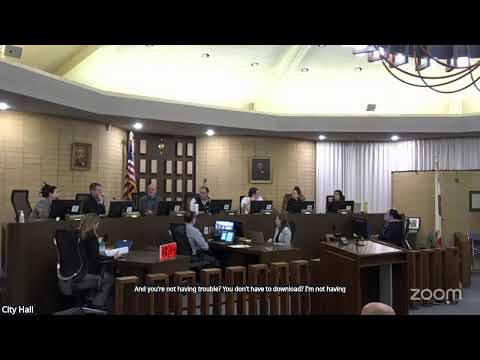
Burlingame staff and Parks Superintendent Richard Holtz updated the Planning Commission on Feb. 24 about implementation of the city’s urban reforestation and tree protection ordinance, which City Council adopted in December 2024 and which became effective Jan. 16, 2025.
Holtz said the ordinance expands the definition of protected trees, brings city-owned trees into one consolidated tree code, and closes a loophole that allowed developers to remove newly planted replacement or reforestation trees immediately after planting. Under the new rules, trees planted as replacement or reforestation become protected at the time of planting and will be tracked in a new asset-management system.
Staff described four disclosure categories for real-estate transactions: (1) street trees (publicly mapped), (2) trees meeting the protected-size threshold (44 inches circumference), (3) replacement/reforestation trees that become protected when planted, and (4) trees within easements. Holtz said the city has created a two-page real-estate disclosure form that must be provided within seven days of sale and that staff will work to get the information into listing packets earlier via outreach to brokerage firms and the local Association of Realtors.
Commissioners asked detailed questions about enforcement, the seven-day disclosure window, penalties for false disclosures, how off-site plantings or fee-in-lieu calculations would work, and monitoring periods for replacement trees. Holtz said staff will continue to refine public-facing guidance, develop clearer guidance distinguishing replacement and reforestation trees, build the asset-management database (starting with zero entries for post–Jan. 16 plantings), and consult legal counsel about penalty language and security requirements for serial offenders; the ordinance also allows the director discretion to require security for replacement trees to ensure a five-year survival period in some cases.
Holtz said staff updated brochures, an online permit, and outreach materials and will present to brokerage groups to encourage earlier disclosure at listing. Commissioners suggested clearer, standardized permit/landscape forms to make it easier to identify which trees belong to the subject property versus neighboring parcels. Staff noted many implementation details are still being refined and will return with clarifications as needed.