Get Full Government Meeting Transcripts, Videos, & Alerts Forever!
Get email alerts on the Fort Gates Ferry topic
No spam. Unsubscribe anytime.
Putnam County commissioners direct staff to study options for reopening Fort Gates Ferry
Summary
At a March 10 special workshop, residents urged reopening Fort Gates Ferry for safety, history and tourism; county staff warned state submerged-lease and ownership issues remain and commissioners directed staff to research leases, ownership and procurement options and return with recommendations.
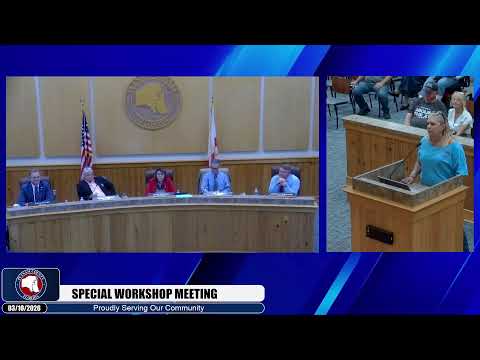
Putnam County commissioners on March 10 heard hours of testimony from ferry operators, residents and staff and directed county staff to research legal ownership, expired leases and procurement options that would enable reopening the historic Fort Gates Ferry without committing additional taxpayer funds.
The workshop drew multiple presenters and dozens of residents from both sides of the St. Johns River who described the ferry as an historic and practical crossing. "We own the barge," presenter Travis Roberts told the board, explaining that he and Dale Jones have operated the vessel and barge and that insurance and captain credentials are current. Roberts urged the county to repair a damaged landing on the Ocala (west) side or allow local operators to take over operations under a lease or similar agreement, saying local fundraising could cover reconstruction and routine maintenance.
County staff cautioned that several legal and administrative "layers" must be resolved before reopening. "The submerged land lease is expired," county staff attorney/administrator Mr. Commando said during the meeting, noting the county would need uplands interest and to negotiate with state agencies before making improvements or obtaining a new submerged-land lease. Staff also identified historic-designation requirements (such as a commemorative plaque) that the state or historical society could require for a grand re-opening.
Speakers recounted the ferry's history, past grant efforts and competing cost estimates. Resident and former grant author Judith York said earlier grant work and FDOT involvement inflated project scope: "Fort Gates could be done for 50,000," she said, arguing that federal and FDOT bridge standards had turned a simple landing repair into a multimillion-dollar design. Presenter Roberts and others disputed agency accounting and said substantial grant funds were once allocated to the site; staff said establishing where funds went and confirming legal interests will require review.
Public-safety concerns were a recurring theme. Residents and operators described delayed emergency response times and gave examples — including water recoveries and rescues — that they said demonstrate the ferry's utility beyond tourism. County fire/rescue staff told commissioners modern ambulances and engines likely cannot ride the ferry as configured, but the sheriff's office and fire teams have boats and mutual-aid options that can respond; the board heard that the ferry could nonetheless shorten some response times in certain scenarios.
Engineering photos and on-site tape measurements shown at the workshop described a small, timber landing with metal ramp and pilings in deteriorated condition; a county engineer and contractors said much of the top structure would likely need replacement. An off-the-cuff estimate mentioned in the meeting placed reconstruction in the low six figures, while residents and some public commenters asserted local repair and fundraising solutions in the tens of thousands would suffice. Commissioners and staff emphasized those cost estimates are preliminary and that detailed engineering and bids would be required.
Commissioners said they were not prepared to approve any county-funded rebuild at the workshop. Instead they gave staff direction to take concrete next steps: identify and document current ownership of upland parcels and any county interests, confirm the status and requirements of state submerged-land leases, prepare options (lease, deed with reverter, surplus/competitive procurement or county-supported sublease), and draft potential contract language and insurance requirements to enable a private operator to run the ferry while protecting county interests. Staff and counsel will return to the board with findings on legal constraints and proposed documents for public action.
The meeting closed with commissioners offering nonbinding support — including letters of support for historical grants — and residents expressing willingness to fund repairs or operate the ferry if the legal hurdles can be cleared. No formal vote or transfer occurred during the workshop; commissioners said the next step is a publicly noticed agenda item after staff and legal review.