Get Full Government Meeting Transcripts, Videos, & Alerts Forever!
Get email alerts on the Nuisance Abatement topic
No spam. Unsubscribe anytime.
City contractor outlines nuisance‑abatement wins, vows to pursue remaining illegal dispensaries
Summary
Enso Law Firm attorney David Welch told the Compton City Council the city has recovered about $1.2 million in settlements and obtained judgments in multiple nuisance cases tied to illegal dispensaries and blighted properties; Welch described receivership sales and ongoing enforcement steps.
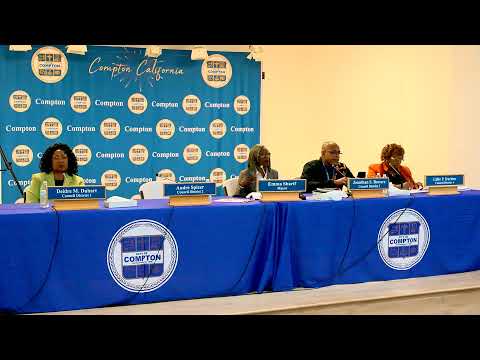
Attorney David Welch of Enso Law Firm told the Compton City Council on Nov. 4 that the city’s nuisance‑abatement program — started in April 2023 — has produced settlements and judgments the firm is now seeking to enforce. Welch said his office has settled 10 cases on behalf of the city, resulting in roughly $1.2 million collected, and has obtained judgments in nine additional cases, with a total judgments figure he described as approximately $187 million.
Welch said the program began with illegal marijuana dispensaries and expanded to other nuisance properties, including burned‑out buildings and lots used for illegal encampments and dumping. He described recent court actions that placed several properties into receivership so a court‑appointed receiver could secure and ultimately sell or redevelop the sites. Welch cited specific examples: a two‑story building at 2007 East Compton Boulevard where the first floor housed an alleged illegal dispensary and the upper floor had many small residential units; 1600 Tucker, a burned‑out property moved into receivership; the 100 block of East Raymond, for which the city secured an abatement order and a judgment to allow ongoing cleanings; and 1806 West 136th Street, which entered receivership and was sold to a family that will occupy the home.
Council members pressed Welch for details. Council member Doohart asked whether the $1.2 million represented cash collected; Welch confirmed the city has collected cash settlement amounts and offered to provide line‑item figures. He explained that when receivership is granted, the court temporarily places the property under a receiver’s control, who may sell it, and the city can seek to recover abatement costs via liens and judgment enforcement. Welch cautioned that some defendants can be difficult to locate or have limited recoverable assets, but said pursuing judgments “sends a message” to landlords, financiers and operators that illegal activity will be enforced.
Welch also said the city is working with code enforcement and the sheriff’s department to close the remaining illegal dispensary he identified on a city map; he said the red dots on his slide indicated closed locations and the blue dot indicated a dispensary that remained open at the time of the presentation.
The presentation drew applause and follow‑up questions about abatement frequency, the mechanics of future enforcement and how abatement costs are recovered. Council members asked staff to supply further documentation and to continue coordinating with code enforcement and the county sheriff on enforcement steps.
The mayor and city manager thanked Welch and noted the work is intended to protect neighborhoods and encourage reinvestment.