Get Full Government Meeting Transcripts, Videos, & Alerts Forever!
Get email alerts on the Historic Preservation topic
No spam. Unsubscribe anytime.
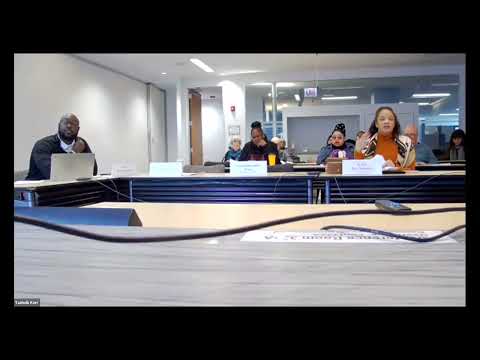
Evanston reparations meeting presses for preservation tools and aid for legacy Black businesses and landlords
Summary
Committee and preservation staff discussed landmarking, thematic historic districts, tax incentives and low‑barrier financial tools to protect culturally significant Black business corridors; public commenters urged support for small Black landlords, transparency on reparations payouts, and protection of historic properties.
Committee members and preservation staff explored tools to recognize and preserve Evanston's Black business corridor on Asbury and Emerson, including local landmark designation, thematic historic‑district designation, and flexible review that targets demolition risk rather than routine alterations.
Preservation staff said designation can be tailored to communicate and protect the parts of a building that embody the history while allowing practical alterations. "You can work as a partner with the commission to decide exactly how it's managed in the future," a preservation official said, noting options such as demolition review or non‑contiguous thematic districts that can secure eligibility for tax incentives and county or state preservation programs.
Committee members and community speakers stressed that many long‑time owners face high upfront costs to access grants or tax‑credit programs. Staff and Shorefront Legacy Center representatives suggested lower‑barrier tools, such as permit‑fee deferrals or targeted local incentives, that would help small owners with deferred‑maintenance burdens and prevent loss of institutions.
Public commenters raised related concerns about housing displacement, small landlords who accept Section 8, and questions about the committee's reparations distributions and grant allocations. One commenter described owning century‑old mixed‑use properties in the Fifth Ward and said landmark status alone had not protected a nearby Butler building from demolition in a prior case.
The committee asked staff and Shorefront to prepare a memo listing immediate, short‑term incentives and longer‑term strategies to preserve corridor buildings and increase access to funding; staff agreed to follow up and coordinate with Shorefront and county/state preservation programs.