Get Full Government Meeting Transcripts, Videos, & Alerts Forever!
Get email alerts on the Zoning topic
No spam. Unsubscribe anytime.
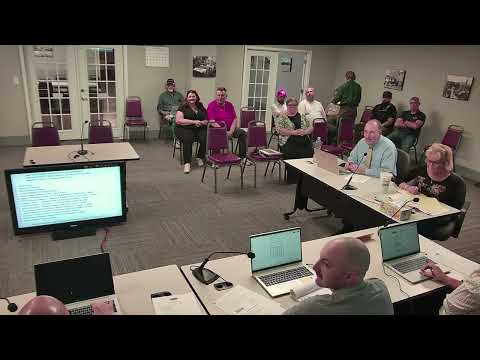
Prospective Sierra Stables outlines riding lessons, tack shop at Forest Street; council to review zoning
Summary
Prospective operators for 'Sierra Stables' told the council they plan small-scale riding lessons, occasional trail rides and tack sales on a roughly 6.6-acre Forest Street parcel; council asked staff to verify zoning maps and whether a conditional use permit is required before any approvals.
Prospective operators of a proposed equestrian business described plans to start with small-scale riding lessons and tack sales at a Forest Street property, and council members asked staff to clarify whether the site’s zoning requires a conditional-use review.
Barry Cole and Cory O’Brien, representing Sierra Stables, said the parcel is roughly 6.6 acres and that their initial program would use two to six horses for lessons, with a possible weekend trail-ride program later. "We would start relatively small, probably between two and six horses," Cole said, adding he could expand by bringing horses from a nearby property for weekend events.
City staff and the city engineer, Darren Newfeld, told the council a 2003 zoning map surfaced during review that shows some outlying parcels as R1 (residential), but he said the appraiser’s office and historical practice indicate outlying annexed lands are typically zoned agricultural (A) unless an ordinance evidences a change. Darren told council, "That map... unless something is produced that shows that map is valid, I'm saying that all these outlying areas are A [agricultural]."
Council asked staff and the city attorney to locate any ordinance or minutes that would validate the 2003 map before making a final determination. If the parcel is R1, applicants would need a conditional use permit (and a variance tied to a 500-ft separation listed in the packet); if it remains agricultural the process would differ, with the council noting an exception may still be needed for animal-keeping inside city limits.
The applicants described business operations (riding lessons, resale of saddles/tack, and a small cactus/landscaping nursery in the longer term) and emphasized local tourism benefits and connections with nearby lodging and dining. Council members expressed enthusiasm but emphasized the need to resolve zoning and permit questions with staff before scheduling formal planning and commission review.
Next steps: City staff will search for documentary evidence (ordinances or minutes) to confirm zoning; the city attorney will advise on the needed permits and variance process, and the applicants were invited to return when the legal zoning status and permit requirements are clear.