Get Full Government Meeting Transcripts, Videos, & Alerts Forever!
Get email alerts on the Health And Human Services topic
No spam. Unsubscribe anytime.
Dof1a Ana County HHS outlines local services, community centers and outreach
Summary
Dof1a Ana County Health and Human Services staff described the department's three divisions, the role of eight community resource centers and programs ranging from probation compliance to diabetes prevention and naloxone training, and urged residents to contact HHS for help.
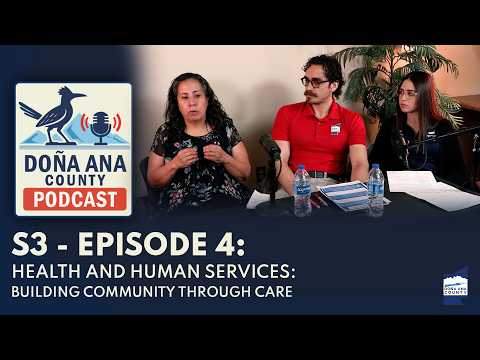
Jamie Michael, director of Dof1a Ana County Health and Human Services, described the county's HHS as a locally run department that connects residents to health, social and probation-related services and partners with community organizations to deliver programs.
Michael said the department operates three primary divisions: misdemeanor compliance (probation support), outreach and education (which runs community resource centers and uses community health workers), and program operations (which manages grants and contracts). "We're very unique and we can...be adaptive to our local community needs," Michael said.
Claudia Mes, the department's community outreach coordinator, and Brian Madano, who works in health promotion, told the podcast that HHS runs eight community resource centers across the county where residents can get referrals, attend classes and access partners such as hospitals for lab services and clinician follow-up. "We serve as a hub for people to socialize," Mes said, noting centers host senior meals, arts-and-crafts and other activities that reduce isolation.
Carla, a compliance officer who works with people on supervised probation, said the DWI/probation compliance program focuses on connecting participants with services rather than only enforcement. "I'm here to help you. Anything you need, you know, I can get you connected to resources," she said, describing help that can include therapy, clothing or food assistance.
Staff also highlighted prevention and public-safety programs: mental-health-first-aid training, public education about the 988 crisis line, distribution and training on naloxone (Narcan) to reverse overdoses, and child-safety events such as affordable car-seat clinics.
Speakers acknowledged challenges. Several staff members said many residents still do not know the county offers these services despite social-media posts, flyers and targeted outreach by community health workers, and they stressed that building trust with people who may be wary of government (including people on probation) is a continuing priority.
On disaster response, staff said community centers functioned as local shelters and resource hubs during recent floods (speakers referenced events in Balo and Vado), and HHS staff coordinated with county emergency management and roads crews to assist affected residents.
Michael and staff urged residents to reach out if they are unsure where to start. County administration's number given on the episode was 575-525-5800; staff also encouraged following Dof1a Ana County social channels for program announcements and local event calendars.
The episode closed with an appeal for residents to use community resource centers as both service access points and social spaces; Michael emphasized that when HHS cannot provide a service directly, staff will attempt to connect callers with the correct agency or resource.