Get Full Government Meeting Transcripts, Videos, & Alerts Forever!
Get email alerts on the Early Childhood topic
No spam. Unsubscribe anytime.
After Shared Visions denial, district outlines plan to sustain three‑year‑old preschool using at‑risk and special‑education funds
Summary
Following a denial of Shared Visions grant funding, Superintendent Mike McGroy and finance staff proposed expanding the district’s use of at‑risk dollars, flex/categorical carryovers and special‑education funding for three‑year‑olds on IEPs to sustain free three‑year‑old preschool on an ongoing basis; board members asked for assurances that other programs would not be cut.
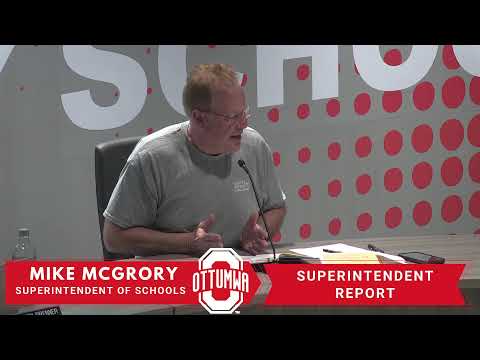
Superintendent Mike McGroy told the board the district did not receive the Shared Visions grant that would have supported free three‑year‑old preschool and that staff had explored alternative, ongoing funding sources.
"To say that was a disappointment is a huge understatement," McGroy said, describing the district’s efforts to explore appeals and other funding streams. He said the appeal process was procedural and not likely to alter the outcome.
John explained the alternative funding approach: expand the district’s definition of the at‑risk population to include three‑year‑old preschoolers, use flex/categorical carryover funds to seed the program, and rely on special‑education funding for three‑year‑olds who qualify with IEPs (those students generate weighted special‑education funding). "Between those funds and the ability to use at‑risk funds we kind of developed a plan to continue running the operation using our at‑risk dollars," John said.
Board members asked whether the reallocation would cut other services. Staff replied that the plan would draw on specific carryover or program surpluses and that the district had identified savings (vacancies, turnover, retirements) that could be reallocated without reducing existing services. They also said the program would be structured as ongoing rather than a one‑year patch, and that the board could be asked to amend at‑risk plan language if necessary to make the change explicit.
Staff emphasized the program’s objective: improving kindergarten readiness and early childhood outcomes, which they said correlates to longer‑term academic success. The board requested follow‑up language changes to the at‑risk plan for formal approval if staff determines that is required.
Next steps: staff will finalize allocations, identify specific carryover amounts to place in the district flex fund and return to the board if a formal change to the at‑risk plan is needed.