Get Full Government Meeting Transcripts, Videos, & Alerts Forever!
Get email alerts on the Transportation Safety topic
No spam. Unsubscribe anytime.
Trenton Safe Streets committee lays out Vision Zero plan, cites $1M in grants and data gaps
Summary
Planners told the City Council the campaign to reduce traffic deaths focuses on a small high‑injury network and won roughly $1 million in planning and construction grants, but officials said better pedestrian and bicycle counts and clarified ordinance language are needed to prioritize projects.
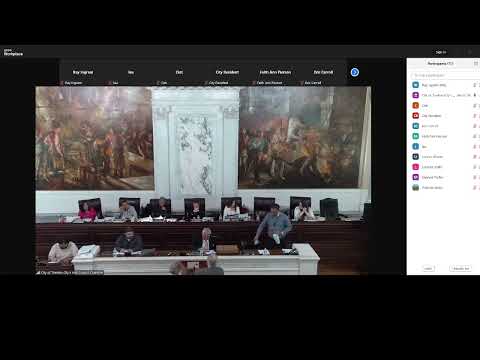
TrentonCity Council on April 7 heard the Trenton Safe Streets for All Committeeannual report, which framed the cityapproach to traffic safety through a Vision Zero "safe system" that aims to eliminate fatalities and serious injuries.
"Our goal is to reach zero traffic deaths," said Jen Ferris, a transportation planner with the Delaware Valley Regional Planning Commission, in a presentation that emphasized layers of protection such as lower design speeds, protected bike lanes and post-crash care. Ferris and Lisa Serasol, the city's transportation planner, told council that 75% of Trenton's fatal and serious crashes occur on roughly 16% of the city's streets, which the committee calls the "high injury network." That concentration, the presenters said, makes corridor-focused investments especially effective.
The committee reported two grants totaling about $1 million this year: roughly $800,000 toward a protected bikeway design and construction for Prospect Street and about $200,000 for planning work on Perry Street. "By focusing those improvements on those streets, we can offer the greatest opportunity to save lives," Ferris said.
Council members pressed staff for implementation details and data. Several members asked when the committee would return with clarified ordinance language and specific projects. Serasol said the committee has met since January 2025, expects to continue meeting roughly six times a year and anticipates bringing suggested clarifications to the council within the next three to four months.
Members also raised jurisdictional questions on state- and county-owned roads. "Is Route 29 part of this framework?" asked one council member. Serasol said the state and county are partners, and that some high-injury corridors are state roads where New Jersey Department of Transportation plans or signalization pilots already exist; coordination will be required on design and implementation.
Council members asked for more crash-before/after data on signal projects and better pedestrian and bicycle counts to guide prioritization. "If we can get something like Jersey City's before-and-after comparisons, that would be very helpful," Councilwoman Frisbee told the presenters.
City and regional staff said they plan to homogenize data collection across departments, expand outreach to ward meetings, and bring clearer language and action items to future council sessions. The report and committee materials will be posted on the city website, staff said. The committee highlighted continued opportunities to use targeted federal, state and regional funds to move design and construction projects forward.