Get Full Government Meeting Transcripts, Videos, & Alerts Forever!
Get email alerts on the Implementation Plan topic
No spam. Unsubscribe anytime.
First 5 Sacramento debates steep program cuts as staff lays out 20% reduction plan
Summary
Staff proposed a 2027–2030 implementation plan that would absorb an anticipated 20% funding reduction by prioritizing racial‑equity investments and trimming other programs; the proposal drew widespread public comment urging preservation of breastfeeding, crisis nurseries and home‑visiting supports.
Staff presented recommended funding priorities for the 2027–2030 implementation plan and said the commission must account for a planned 20% decline in Proposition 10 revenues.
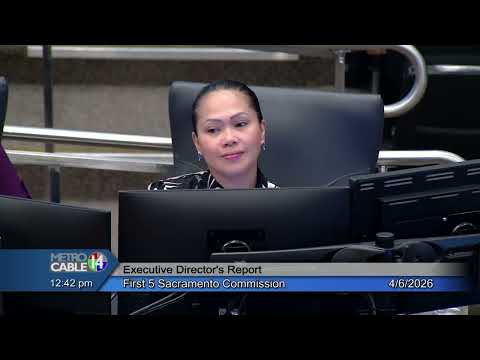
The presentation by Executive Director Julie framed the cut as a “measured reduction” intended to preserve direct services and leverage other funding, while shrinking some categories of work. Julie said the commission —has been preparing for a decline— and emphasized a rubric that combined trend data, community input and foundational principles to score 23 strategies.
The plan recommended maintaining most racial‑equity funding and full support for certain proven programs such as infant safe‑sleep and core components of home visiting, while proposing reductions or eliminations across others. Notable staff recommendations included a proposed 50% reduction to breastfeeding supports, elimination or deep reduction of some birth‑to‑workforce pipeline and birthing hospital initiatives, and a shift from broad childcare professional development to advocacy and targeted, narrow investments.
Commissioners sought more detail on leveraging non‑First 5 dollars and return on investment. Commissioner Kothari asked whether certain strategies bring in outside funding; staff replied that family resource and birth‑beyond efforts commonly leverage roughly $4.6 million per year above First 5 allocations and that exact leverage was included in packet materials.
Public commenters and program partners pressed the commission to revisit the magnitude of cuts. Speakers from WIC and lactation services cited local breastfeeding outcomes for families who received lactation support—one WIC official said exclusive breastfeeding among clients who accessed specialized lactation help rose to about 34.2%—and urged smaller reductions to lactation funding while state and managed‑care policy changes (including AB2160 and new managed‑care maternity guidance) mature. WIC and lactation providers described pilots to bill care plans and ongoing efforts to secure long‑term billing streams but said those transitions are not yet reliable.
Representatives of crisis nurseries, Help Me Grow and early‑learning coaching described concrete service counts and outcomes. Help Me Grow and a contracted developmental screening network reported thousands of screens and hundreds of home visits; crisis nurseries reported 333 unduplicated children served during the fiscal year and said most stays addressed last‑minute child‑care breakdowns that otherwise would force parents out of the workforce.
Commissioners and staff said they will refine options before returning in June. Several commissioners asked staff to prepare alternative funding options and clearer ROI and leverage summaries so the commission can weigh narrower, deeper investments against broader protections for services that community members said are critical.
The item remained a discussion item; staff indicated the June meeting will present a final proposal for action and warned commissioners that recusal requirements may apply to some votes.