Get Full Government Meeting Transcripts, Videos, & Alerts Forever!
Get email alerts on the Community Programs topic
No spam. Unsubscribe anytime.
Stonecrest commission advances plans for youth and production training, outlines funding scenarios
Summary
Commissioners discussed three proposed training programs and multiple community events, reviewed program costs and scheduling, and sketched sponsorship scenarios against a roughly $20,000 program budget while deferring final vendor sign‑offs until dates and procurement paperwork are confirmed.
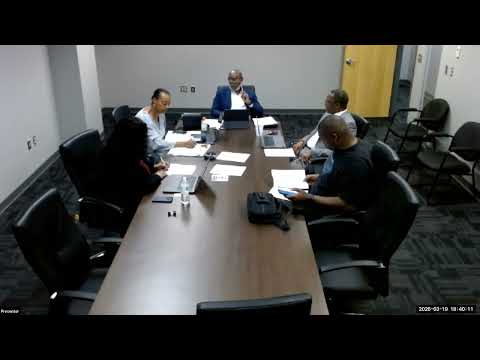
The Stonecrest Film and Entertainment Commission on March 19, 2026 opened its meeting and moved into an extended discussion of proposed youth and production-training programs and community events, reviewing costs, dates and next steps for vendor paperwork.
"Good evening citizens and thank you for joining us as I welcome you and call this Stone Press Film Entertainment Commission meeting to order today, Thursday, March 19th, 2026 at 6:33 p.m.," the chair said as the meeting convened and roll call established a quorum. Members then approved routine agenda items and past meeting minutes by voice vote.
The commission’s event committee presented three program proposals flagged for early implementation: a youth production camp branded in discussion as "How Big Is Your Dream" (spring-break and summer sessions, $100 per child sponsorship option), the "Amazing Stories" youth program (dates and capacity under discussion), and a production-focused program for adults and older teens organized by a producer identified in the discussion as "Trey." Program descriptions included activities (acting, singing, instrument work, on‑set production experiences), end‑of‑session performances and, for some adult offerings, one‑week and two‑week options.
Committee members and commissioners reviewed per‑student pricing and venue costs. The production/broadcast camp presented a model with a $1,000 per‑student price and a minimum cohort of about 25 students; commissioners discussed subsidizing part of that fee (examples in discussion ranged from $200 to $500 per parent buy‑in) if the commission chose to underwrite a portion of tuition. For one youth provider the organizers reported an overall program cost figure shared in materials of about $120,000, but commission members emphasized the commission would mostly consider targeted sponsorships (paying some or all of individual students’ registration) rather than full program underwriting.
Commissioners repeatedly noted the need to pin down firm dates and vendor details before committing funds. The group identified internal steps required to move forward: obtain final session dates from providers, secure any venue or studio use (the commission discussed using an on‑site room to reduce rental fees), complete vendor setup with finance, and issue purchase orders or grants once paperwork and schedules are confirmed.
Budget parameters shaped the planning discussion. Members referenced an available program budget for these efforts (discussed internally as approximately $20,000) and ran several illustrative scenarios: subsidizing 25 students for a spring session (roughly $2,500 at $100 each) and a larger summer cohort (figures discussed around $5,000 for a planned sponsorship slice), or underwriting a portion of higher‑cost production camps by making parents responsible for a partial buy‑in. Commissioners stressed these figures were planning proposals, not formal approvals; they agreed to finalize exact sponsorship levels after confirming dates and invoices from providers.
Beyond training programs, the commission discussed event pipeline items: a prospective film festival partnership (referred to as the "Bronze" festival) and public screenings such as "Screen on the Green," studio crawls and a proposed Stonecrest Jazz Festival. Commissioners discussed site visits, possible co‑funding models with external partners, transportation and merchandising/logistics and noted a larger events budget line (discussed in the meeting as roughly $30,000 across multiple events) for planning purposes.
Before adjourning, members agreed to schedule a follow‑up committee meeting to finalize dates, vendor paperwork and precise budget allocations so the finance office can complete vendor setup and process purchase orders. The meeting concluded with a motion to adjourn that carried by voice vote.
What happens next: commissioners asked event leads to provide firm dates and vendor documentation as soon as possible; finance will set up vendors and process purchases once the commission confirms dates and invoices. The commission set a target advisory board meeting for May 21 and asked commissioners to submit suggested advisory board names and bios by the April meeting.