Get Full Government Meeting Transcripts, Videos, & Alerts Forever!
Get email alerts on the Lot Coverage topic
No spam. Unsubscribe anytime.
Corrales planning commissioners recommend keeping 35% lot‑coverage cap after public work study
Summary
After hearing technical testimony and public comment, the Village of Corrales Planning & Zoning Commission voted 5–1 to recommend the council leave the existing 35% lot‑coverage limit unchanged, citing drainage metrics, enforcement issues and legal risk from retroactive reductions.
The Village of Corrales Planning & Zoning Commission voted 5–1 on Tuesday to recommend that the Village Council leave the existing lot‑coverage ordinance unchanged at 35%.
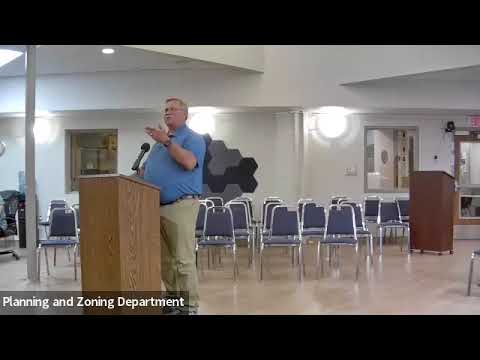
Commissioners weighed technical testimony from developers and engineers, attorney concerns from recent buyers, and a handful of public statements before making the recommendation. "I don't know what problem we're trying to solve," said Gary Bennett, a Corrales resident who urged the commission not to reduce property owners' ability to use their land.
The discussion centered on whether the lot‑coverage percentage is a primarily technical, drainage‑related standard or a proxy for limiting house size. Aaron Cook, a land developer and civil engineering consultant, argued the 35% limit ties to on‑site detention and runoff management in a jurisdiction that lacks regional drainage ponds. "Impervious area actually matters," Cook said, urging detention‑volume solutions over a sweeping reduction in percent coverage.
Builders and contractors warned of local economic consequences. "It would be devastating if that was to decrease," said Norm Shriles, a local custom home builder, who told commissioners lower coverage would cut local sales and business for subcontractors. Mackenzie Bishop, a builder who has worked on local development standards, said the lot‑coverage clause is being used by some neighbors to try to shrink nearby houses. "This clause in the village code is being weaponized," Bishop said, adding that retroactive reductions could amount to an encumbrance on property and invite litigation.
New homeowners also raised concerns about reliance on existing rules. "If we are told that we can't because we have already submitted our plans... it will cause legal issues," said attorney and recent buyer Megan O'Neal.
Staff noted the comprehensive plan recommends the council "consider revising lot coverage requirements" (it contains a whereas suggesting retention of permeable surface), but cautioned that whereases and draft language are not the same as codified law and that some proposed language (for example treating gravel as impervious surface) would face technical and legal challenges.
Commissioner Mick Harper moved that the commission recommend the council leave the ordinance unchanged at 35%; Commissioner Michael Ro seconded. The motion carried 5–1, with Bob Pearls the lone dissenting vote. Commissioners encouraged the council to review the recorded discussion and to consider technical options such as modest increases in detention‑volume standards or clearer engineering criteria rather than an across‑the‑board reduction in lot coverage.
The commission's recommendation will be forwarded to the Village Council for its consideration; the commission indicated it could redraft a more narrowly targeted recommendation if council asks for follow‑up.