Get Full Government Meeting Transcripts, Videos, & Alerts Forever!
Get email alerts on the Kindergarten Enrollment topic
No spam. Unsubscribe anytime.
Parents urge Barrington 220 to restore two‑section Chinese immersion as district previews kindergarten options
Summary
At the April 7 Barrington CUSD 220 board meeting, parents urged the district to return to a two‑section Chinese immersion model after shared teachers and larger kindergarten classes led to what one parent called daily shutdowns. District staff presented enrollment projections, two administrative options for sustaining immersion and next steps including lotteries and further family communications.
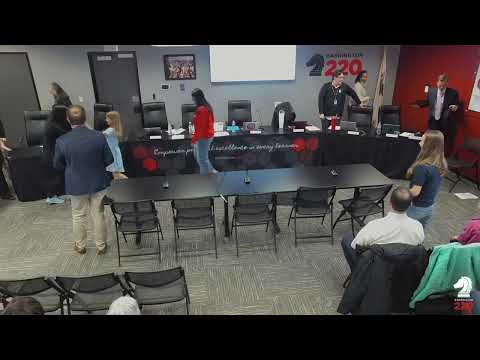
A group of parents urged Barrington CUSD 220 trustees on April 7 to reverse recent changes to the district’s Chinese immersion kindergarten program, saying larger class sizes and shared teachers have harmed some students.
"What is happening in these classrooms is not working," parent Tracy Miloffer said during public comment, recounting that a kindergarten class grew to 26 students and that, in her family’s experience, her children had daily meltdowns and a decline in confidence. "Five kindergarteners have been pulled from the program this year," she said, and she urged the board to "return to the two‑section model with dedicated teachers before the next school year." Miloffer added that families report little outreach or follow‑up from the district about enrollment decisions.
District staff responded during an extended enrollment presentation later in the meeting, telling trustees that the snapshot pulled April 2 showed roughly 400 incoming kindergarten students either fully enrolled or on hold; about 320 had indicated interest in full‑day kindergarten, zero had chosen half‑day, approximately 10 had indicated interest in the KAB program at the high school, about 10 in Chinese immersion and 56 in Spanish dual language. Staff cautioned the figures are preliminary and likely to change between April and the start of school as families complete paperwork or newly register.
To sustain the Chinese immersion (CI) pathway while addressing enrollment variability, administration proposed two provisional options to the board: Option 1 would create two multi‑grade K1 sections housed at Countryside Elementary (each classroom pairing kindergarten and first‑grade students with a compacted curriculum and dual‑language teacher pair); Option 2 would create one kindergarten section and two first‑grade sections plus a second‑grade section, also at Countryside, giving the district more conventional grade separations. Staff said either option would preserve a paired‑teacher approach (a Mandarin‑dominant teacher and an English‑dominant teacher) and keep programmatic language goals intact. The proposal also includes keeping KAB as one section and running a two‑section model with a lottery and wait list for Spanish dual language because demand exceeds seats.
Trustees and administrators said they would continue to monitor enrollment, finalize placements, and follow up with families. "Registration closed March 31, and we'll notify families with program placement updates and lottery results in mid‑April," a district presenter said, adding that staff will continue to invite families to change preferences while capacity and staffing are resolved. Board members also committed to further outreach and one‑on‑one conversations with families who do not receive their preferred placement.
Board members pressed administrators on instructional safeguards for younger learners in multi‑grade classrooms. Trustees were told multi‑grade classrooms would use a compacted curriculum and small‑group instruction targeted to students’ readiness, plus social‑emotional supports and progress monitoring during the spring and following the district’s assessment windows. Administrators noted the district has used multi‑grade approaches in other programs and will build professional development time for teachers over the summer if the board endorses a multi‑grade option.
The board gave staff direction to pursue program planning and family communications for the options presented, with the understanding administrators will return with updated numbers and recommended placements if enrollment shifts. Staff emphasized that, on balance, the district is now providing full‑day kindergarten districtwide earlier than state timelines and that the program’s broader benefits remain a central priority.
Next steps: staff said families would be notified of lottery results and placement communications in mid‑April, the district will continue enrollment monitoring through the spring and summer, and staffing and final section assignments are expected to be firmed up before the May–June window for contracts and assignments.