Get Full Government Meeting Transcripts, Videos, & Alerts Forever!
Get email alerts on the Animal Control topic
No spam. Unsubscribe anytime.
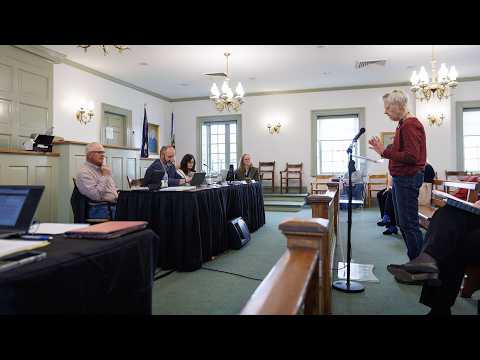
Board authorizes advertising dogs running‑at‑large ordinance amendment for June public hearing
Summary
Supervisors authorized staff to advertise an amendment to the county's dogs-running-at-large code that would broadly forbid unrestrained dogs, allow law enforcement or private persons to detain and transport dogs to the shelter or owner, require a dog‑tag list from the treasurer, exempt hunting/training dogs, and set scaled fines for repeat offenders. A June public hearing was approved; the transcript shows a voice vote without a numerical tally.
Supervisor Goff introduced a proposed amendment to Rappahannock County code intended to address repeated incidents of dogs running at large and injuring livestock. The draft language would broadly prohibit unrestrained dogs unless they are "under immediate control" (obedient and responsive to the handler), allow law enforcement or private persons to detain or transport dogs to the county shelter or to the owner when appropriate, and require the county treasurer to provide the sheriff's office a current dog‑tag list to assist identification.
The draft also contemplates scaled fines for repeat offenders, a civil penalty for pack behavior required by state enabling language, and an explicit exemption for hunting and training dogs when they are engaged in those activities. Presenter Goff emphasized the goal was to address recalcitrant owners whose dogs repeatedly injure livestock or create public-safety problems while still allowing neighborly discretion in one‑off incidents.
Board members raised questions about enforcement paths (magistrate, summons or warrant, prosecutorial discretion), the impact additional pickups could have on shelter capacity, and whether first‑offense penalties should allow judicial discretion. Staff reported the shelter logged 148 dog intakes in the prior year; the board discussed baseline fines (not less than $150 for first convictions was suggested as a compromise) and the practical effect of a graduated penalty scheme.
After discussion, the board authorized staff to advertise the ordinance for a public hearing at the June regular meeting. The transcript records an affirmative voice vote; a numerical tally was not recorded.