Get Full Government Meeting Transcripts, Videos, & Alerts Forever!
Get email alerts on the Community Services topic
No spam. Unsubscribe anytime.
Community Action director and library leaders urge county help for low‑income residents and strained library services
Summary
Isaiah Scott, newly named executive director of the Community Action Partnership, urged Limestone County commissioners to ensure incoming industry reinvests in communities that house low‑income residents. Library leaders reported strong usage growth and said they will return with a budget request to expand services.
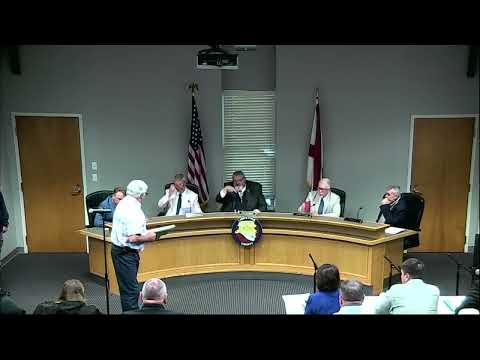
Isaiah Scott introduced himself to the Limestone County Commission as the new executive director of the Community Action Partnership serving Huntsville, Madison and Limestone counties and urged commissioners to ensure that incoming businesses “pour back into our cities” to mitigate the impacts on low‑income residents his agency advocates for. “I look forward to a continued partnership with the Limestone Commission,” Scott said during public comment.
The request came amid several public comments about county growth. Craig Basley told the commission that library use is rising sharply and that the system had issued about 10,400 library cards recently, roughly 60% to county residents and 40% to city residents. Basley said one card often brings multiple family members and that staff are “maxed out,” forcing cuts or limits to programs such as children's story time. He said the library will return with “a detailed budget, detailed spending plan” showing needs and how the system proposes to keep up with growth.
The public comments signaled a broader theme of the morning’s work session: county growth driving demand for public services. Scott framed his remarks around housing and services for lower‑income residents, asking the commission to consider how economic development can include investments that help vulnerable households. Basley emphasized the library’s role as an access point for education and services and urged partnership with county leaders to fund staffing and materials.
The commission took the comments under advisement; no formal motion or vote was recorded during the public comment period. The session moved on to proclamations and routine agenda items after public comment closed.