Get Full Government Meeting Transcripts, Videos, & Alerts Forever!
Get email alerts on the Property Revaluation topic
No spam. Unsubscribe anytime.
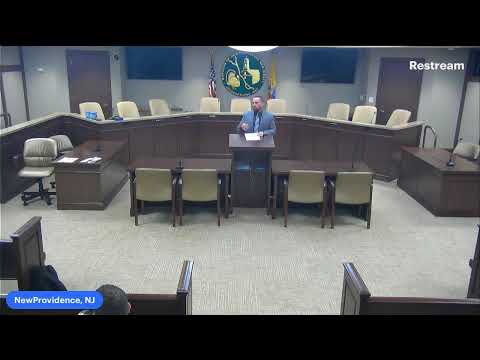
Appraiser Sean Sullivan explains New Providence revaluation process, inspections and appeals
Summary
At an informal New Providence Q&A, appraiser Sean Sullivan outlined a townwide revaluation to align assessed values with current market value, explained inspection and estimation methods, described the appeals timeline (sales window Oct.1–Oct.1; county appeals by May 1) and said homeowners will receive notices in Nov/Dec with tax impacts expected in summer 2027.
An appraisal firm contracted by the town of New Providence explained how the upcoming property revaluation will work and what homeowners should expect.
At an informal public meeting, Sean Sullivan of Professional Property Appraisals told residents that a revaluation recalculates every parcel’s assessment to reflect "what it can sell for in today's market," a process intended to equalize tax burden across the municipality while the municipal budget itself remains largely unchanged.
Sullivan said the firm will rely on comparable sales and market adjustments to set values and will inspect properties to verify exterior measurements and basic interior condition. "To determine a true value of the property you have to get a full scope of what's going on within the property," he said, describing interior walkthroughs used to confirm square footage, finished basements and attics, and other factors not always visible in public records.
Why it matters: When the town’s total assessed value changes, the tax rate is adjusted so the municipal budget is divided across the new grand list. Sullivan gave a numeric example: if the town average value rises 50% and an individual property rises 40%, that homeowner could see a tax decrease; properties that rise more than the town average can expect increases.
Key dates and process details - Sales window: Sullivan said the comparable-sales sampling window is from Oct. 1 to Oct. 1 for the relevant valuation year; generally only sales within that period qualify as comparables for appeals. He said small time adjustments can be applied when market movement within the window is substantial. - Notices and timing: Value notices are expected to go out in November or December of the next year, with assessors receiving finalized values thereafter. Sullivan said changes to homeowner tax bills will not be reflected until the summer of 2027 when rates are set against the new totals. - Inspections and estimation: Inspectors typically work roughly 9 a.m.–4 p.m.; if no one is home they leave a card and homeowners can schedule interior appointments. If interior access is denied, the firm will estimate square footage and condition from exterior measures and available data, which may later be adjusted if owners request inspections or appeals. - Informal review and appeals: After notices, homeowners may submit comparable sales (Sullivan suggested three to five) during an informal review. If unresolved, they may file a formal county appeal (typically by May 1), which Sullivan said can include an appraiser or attorney but is not required.
Residents raised fairness concerns. One attendee asked, "We all use the same roads. So, why would my neighbor have to pay more?" Sullivan responded that in New Jersey the tax system allocates the municipal budget across property values, so higher-value properties pay a larger share.
Technical points and common questions - Square footage: Exterior measurements are primary; finished basements are generally not counted as primary living area unless above grade. Finished attics or basements that meet livability tests will be reflected in value if they are captured in inspections. - Fixtures and amenities: Central air, generators, solar and renovated kitchens can affect market value if sales data show consistent value differences, but adjustments depend on what the market supports. - New developments: Incomplete projects are not assessed as ratables until they are complete; completed new units receive added assessments after the revaluation and are incorporated into future rate calculations. - Inspection coverage: Sullivan said the firm aims to inspect a high percentage of properties (he mentioned an 80% target but acknowledged that entry rates vary) and that additional inspections often occur after notices when homeowners request reassessments.
What homeowners can do next Homeowners should watch for a card from an inspector or for a mailed notice in November or December. If they believe the value is incorrect, they should gather comparable sales from the Oct. 1 to Oct. 1 sampling window and contact the appraisal office for the informal review; the county appeal process remains available afterward.
The firm encouraged homeowners with questions to call the appraisal office for clarification; the session closed after a brief Q&A. The townwide revaluation will produce notices this winter and affect taxes when rates are set in 2027.