Get Full Government Meeting Transcripts, Videos, & Alerts Forever!
Get email alerts on the Public Health Ordinance topic
No spam. Unsubscribe anytime.
Fresno County holds first hearing on ban of land application of human compost
Summary
County public‑health staff and supervisors opened a first hearing on an ordinance to prohibit spreading or integrating reduced human remains (natural organic reduction) in unincorporated Fresno County; the board amended the draft to remove a private right‑of‑action and clarified limits tied to food production.
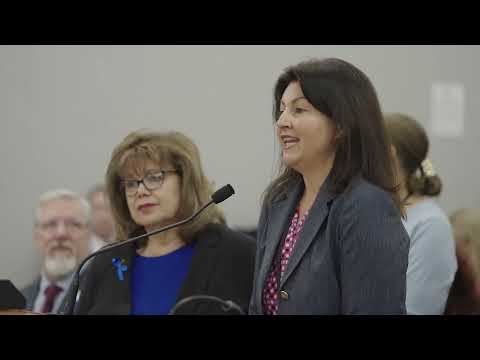
Fresno County held a first hearing on April 14 on a proposed ordinance that would prohibit the land application of reduced human remains — often referred to as human compost or natural organic reduction — in unincorporated parts of the county.
Public Health staff framed the proposal as a local response to AB 351, the 2022 state law authorizing natural organic reduction (effective Jan. 1, 2027) and permitting local governments to prohibit the practice within their boundaries. The proposed local prohibition would not apply to private property that is not open to the public unless food for public consumption is grown there.
Supervisor comments combined public‑health caution and respect for private property. Supervisor Magic said the subject raised questions about standards and proximity to food production and thanked staff and county counsel for careful drafting. Supervisors and staff discussed amending the draft ordinance to avoid unintended consequences and to tighten definitions relating to human consumption and proximity to food production.
Representatives of the natural‑reduction industry asked the board to consider lab testing and operational safeguards; Earth Funeral’s Alan Fernandez said the process his group uses includes lab verification that the finished soil contains no pathogens or hazardous metals. Other residents urged more study and statewide consistency before a local ban.
County counsel explained the draft included an explicit private right of action (allowing affected residents to sue to enforce the ordinance); in response the board voted to delete that provision and to add clarifying language that the prohibition would apply where the first crop after application would be used for human consumption. The board approved the first reading and directed counsel to prepare a fair summary for the required second hearing.
The action is a first hearing; it sets local policy direction and will return for a subsequent hearing before any enforcement provisions take effect.