Get email alerts on the Development Agreements topic
No spam. Unsubscribe anytime.
Planning commission recommends approval of Red Hawk Ranch development agreement amendment and SAD framework
Summary
The commission voted 7–0 to recommend approval of bill 368 (DA20002‑AMD1), which incorporates additional parcels, extends tentative map expirations to 2031, authorizes a framework for a future special assessment district (SAD) to fund backbone infrastructure, allows an on‑site density transfer to recapture units lost to drainage, and relocates the community park to a retention basin.
The Fernley Planning Commission on Sept. 10 voted unanimously to recommend approval of a first amendment to the Red Hawk Ranch development agreement (bill 368 / DA20002‑AMD1).
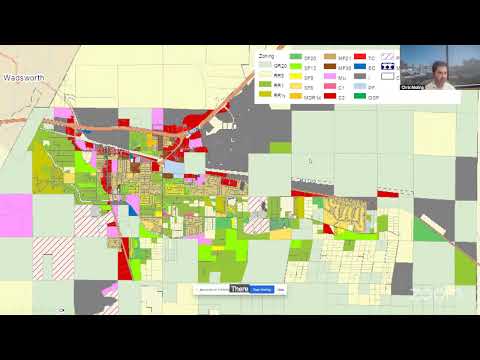
Senior planner Alisa Johansson told commissioners the amendment would: incorporate additional property owners and tentative subdivision maps; extend tentative map expiration dates (the two affected TSMs currently expire in 2026 and would be extended to 2031, including statutorily allowed two‑year extensions); establish a framework for a future special assessment district to finance on‑site backbone roadways, utilities, off‑site roadway improvements and mass grading; authorize an on‑site density transfer to recapture dwelling units lost to an enlarged drainage/retention basin; and relocate the community park to the basin’s northwest corner to increase visibility and add flat playing fields.
Developer representatives led by Derek Kirkland (Wood Rogers) said engineering and FEMA conditional letter‑of‑map‑revision (CLOMAR) work showed backbone infrastructure and necessary offsite improvements currently total about $14 million in today’s dollars, driving the need for an SAD to make the project financially viable. Kirkland said the retention basin doubled in size during engineering and that recapturing about 190 units by moving them elsewhere on site would help cover infrastructure costs.
City attorney Aaron Mortonson said the SAD would be disclosed on title and that the bond and assessment process ultimately goes before the city council for approval; deputy city manager Lydia Altech said council reviews and can stop an SAD before bonds are issued.
The planning commission’s recommendation (7–0) asks council to consider the amended DA, including the five‑year extension of tentative map timelines via a development‑agreement mechanism, and the SAD framework; the motion did not finalize an SAD or bond issuance (those would follow separate procedures before council).
AI generated
The text on this page is AI generated. Summaries, highlights, analysis, and video transcripts are all produced from the original source material.
AI can make mistakes, so if you spot one, and we will fix it for everyone.
Note: the source content is unaltered by us. Any content source we link to, be it a video, an audio recording, or a document, is presented exactly as its publisher released it. That publisher is usually a government body, sometimes an individual official or another organisation.