Get Full Government Meeting Transcripts, Videos, & Alerts Forever!
Get email alerts on the Housing Supply topic
No spam. Unsubscribe anytime.
Outside counsel warns two‑thirds of Fernley’s single‑family parcels are zoned SF6; offers tools to diversify housing
Summary
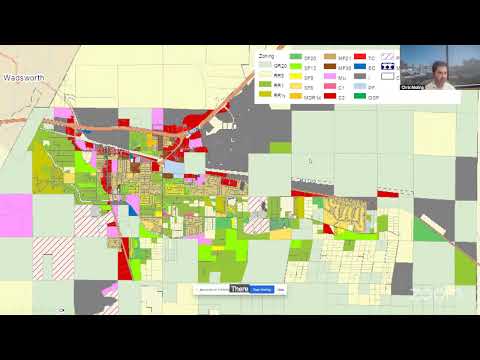
Outside counsel Chris Molina told the Fernley Planning Commission that roughly 4,800 parcels — about two‑thirds of parcels permitting single‑family homes — are zoned SF6, and he recommended tools such as 'missing‑middle' overlays and density bonuses to encourage infill and a broader mix of housing types.
Chris Molina, outside legal counsel to the city, told the Fernley Planning Commission on Sept. 10 that the city’s single‑family zoning pattern is heavily weighted toward the SF6 district and that figure‑level data show “around 4,800 parcels that have SF6 zoning,” roughly two‑thirds of parcels classified for single‑family use.
Molina framed the issue as a tradeoff between preserving community character and broadening housing choice. He said single‑family (SF6) zoning covers a large share of the city’s parcels and that changing that pattern involves fiscal and infrastructure tradeoffs: lower‑density lots push development farther from existing streets and utilities, increasing long‑term maintenance costs unless infill and higher‑density options are encouraged.
Why it matters: commissioners said Fernley needs more housing types to improve affordability and to provide options for residents at different life stages. Molina recommended a menu of planning tools — ‘missing middle’ overlay districts to identify areas where slightly higher densities would be acceptable, density bonuses tied to design concessions, and incentives that reduce developers’ upfront infrastructure costs — and noted that Nevada law (NRS Chapter 278) recognizes density‑bonus mechanisms.
Commissioners pressed for local detail. Commissioner Wagner pointed to the 2018 comprehensive plan’s goal of a more balanced housing mix and said rising new‑home prices (many listings near or above $400,000) limit affordability for workers. Commissioners also raised safety and infrastructure concerns tied to neighborhood growth, including school capacity and a high‑risk intersection at Cottonwood and Highway 95A.
Molina emphasized that wholesale removal of SF6 would not necessarily be the right path; instead, he suggested targeted infill, developer incentives, and careful mapping of where modestly higher densities would be acceptable. He also said fiscal analyses — including vacancy‑rate and household‑demand modeling — are needed before code changes.
Next steps: the presentation was informational; no direct regulatory action was taken. Commissioners signaled interest in further study and policy options that would align zoning with the city’s master‑plan housing goals.