Get Full Government Meeting Transcripts, Videos, & Alerts Forever!
Get email alerts on the Elder Justice topic
No spam. Unsubscribe anytime.
Attorney General William Tong warns Greenwich residents about scams targeting older adults, outlines reporting resources
Summary
At a Greenwich forum, Attorney General William Tong described common scams aimed at older residents — from 'grandparent' and romance scams to phishing that impersonates local institutions — urged precautions such as never wiring money, and gave an elder-justice hotline and reporting steps.
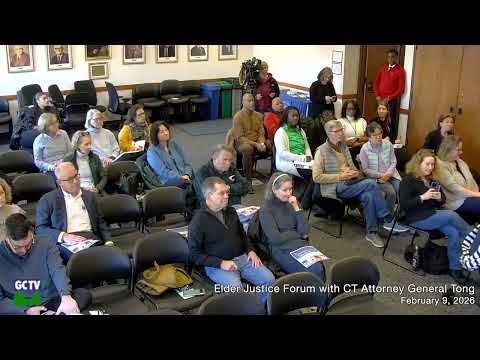
Attorney General William Tong told a forum in Greenwich that scammers and abusers are increasingly targeting older residents and urged vigilance, verification and reporting.
"Don't pick up the phone. Don't stay on the phone," Tong said, laying out common scam tactics and practical steps for older adults and their families. He described schemes that impersonate relatives, banks, utilities or municipalities and urged people to confirm suspicious requests by calling known numbers directly.
Connecticut is aging: Tong noted the state is among the oldest in the nation, with roughly 16% of residents 65 or older and about 17% of Greenwich residents in that age group, and said that demographic reality increases the number of people at risk of financial and physical abuse. He said estimates from advocacy groups place annual losses to elder financial abuse in the billions of dollars.
Tong described several common scams. The so-called "grandparent" scam begins with a call—often spoofed to look like a familiar number—claiming a loved one is in urgent trouble and asking for a wire transfer or gift cards. He warned that staying on the phone or trying to "scam them back" can expose victims to further manipulation and urged never to transfer money to unknown callers.
He also warned about romance-related investment schemes, sometimes called "pig butchering," in which scammers cultivate long relationships and then push victims into fraudulent investments. Tong recounted a public-service example in which a Connecticut woman lost about $1 million after being persuaded to invest in a purported crypto scheme.
Phishing and impersonation of institutions are common, Tong said. "They'll call and say, 'It's the Town of Greenwich. You're overdue on your property taxes,'" he told the audience, urging people to hang up and call the agency or company directly using a number from an official website.
Tong urged routine consumer safeguards: place a security freeze with credit bureaus if identity theft is suspected, verify licensing and registration for home-improvement and solar contractors via the Department of Consumer Protection, and treat high-pressure "one-time" offers with skepticism.
The attorney general described the scale of robocall operations and the role of intermediaries in routing scam traffic. "We have sued the 20 worst gateway operators in this country for robocalls," he said, noting that while enforcement has shut down some large rings, scammers only need a small success rate to cause substantial harm.
Tong also addressed elder abuse beyond scams. "If you or somebody you know is the victim of physical abuse, call the police. Call the Greenwich Town police," he said, adding that much elder physical abuse is carried out by family members and is severely underreported.
He provided a state resource for reporting and help: the Elder Justice hotline at 860-808-5555, describing it as a "one-stop shop" that connects callers to investigators, agencies and support services; callers may leave a message or request confidentiality. Tong named the Elderly Protective Services Unit at the Department of Social Services as one available law-enforcement-capable resource for older adults in need of intervention.
During a Q&A, attendees raised concerns about solar and home-improvement sales tactics, check-cashing scams and deceptive subscription renewals; Tong recommended taking time before signing, checking licenses and registrations, and contacting state consumer-protection authorities.
The forum concluded with Tong reiterating the advice to verify requests for money, to report suspected abuse or fraud to police or the elder-justice hotline, and to take concrete steps—credit freezes, confirmed contact numbers and family code words—to reduce risk.