Get Full Government Meeting Transcripts, Videos, & Alerts Forever!
Get email alerts on the Utilities topic
No spam. Unsubscribe anytime.
Fernley council reviews $101 million utilities plan, directs staff to model grant scenarios and return annually
Summary
The Fernley City Council heard a consultantled five-year water and sewer rate study that outlines roughly $81 million in existing water assets plus an estimated $65 million of needed water projects and about $31 million in wastewater assets with $36 million more projected; the council voted 5-0 to ask staff for annual updates and scenario modeling, including grant offsets and connection-fee impacts.
A consultant told the Fernley City Council that the citys water and wastewater systems will require roughly $101 million in capital work over the next five years and that those projects will put pressure on utility rates and reserves.
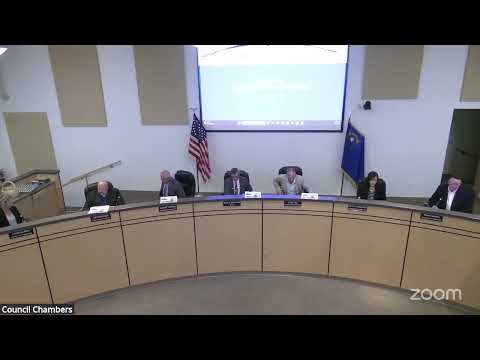
Katherine Hansford of Hansfford Economic Consulting summarized the study during the Sept. 3 meeting, saying the two utility systems account for about 66% of the citys infrastructure and listing about $81 million in water assets with an estimated $65 million of additional water work anticipated over five years and about $31 million in wastewater assets with roughly $36 million of additional needs.
The nut graf: the study projects drawing down capital reserves and using a mix of cash and debt to fund major projects; staff and the consultant said such a strategy can smooth rate increases but will still require higher annual charges in some years unless the city secures grants or revises its capital plan.
Hansford and city staff walked council through the studys assumptions and specific figures: projected increases in operating costs driven by reworked capital improvement needs, an assumption of sustained growth (about 160 single-family equivalent units per year in the consultants model), and sample funding mixes that assume larger capital projects would be funded largely with debt. The presentation showed estimated water capital needs of about $65 million over five years and $36 million for wastewater, and it said the city will likely draw down reserves and issue debt to avoid large, immediate rate spikes.
On residential impacts, the presentation showed current combined water and sewer bills at about $197 per month under the studys usage assumptions and explained that removing the ancillary fee embedded previously in property taxes would reduce bills in January 2026 before calculated rate increases take effect in subsequent years. The consultant also presented updated connection-fee calculations: the water connection fee was shown increasing from about $7,649 per equivalent dwelling unit to about $9,960; the sewer connection fee was shown increasing from about $5,464 to about $6,250 per EDU.
Treasurer Robert Carson noted that eliminating the ancillary property-tax fee reduces bills for many residents by about $49 a year but that it also removed about $4 million in revenue the utility funds previously received. Council members pressed for sensitivity runs and scenarios.
Council members asked for alternatives and additional modeling: Councilman Mendoza requested analyses that would show how grants (for example, 80/20 grants where 80% is grant funding and 20% local match) would change rates and cash flows; others asked for a one-year or smaller-percentage option to reduce the immediate rate impact and then to re-evaluate once grant awards and capital priorities are better known. Councilwoman Zuberski said, "we have a 30 million gallon per day plant and we're using 3 million gallons," arguing the city built capacity that is underutilized and that this historical context affects rate comparisons with other jurisdictions.
Outcome: Council voted 5-0 on a motion directing staff to return with annual updates and additional scenarios, including versions that reflect potential grant funding and the effect of raising connection fees to offset rate increases. The motion (moved by Councilman Torres and seconded by Councilman Hannon) instructed staff to compare options and report back as part of the budget and CIP cycle.
What happens next: Staff and the consultant said the rate study is a planning tool; staff will refine assumptions, present alternatives (including with and without hypothetical grants), and include updated figures during the annual budget/CIP review.