Get Full Government Meeting Transcripts, Videos, & Alerts Forever!
Get email alerts on the Open Meetings And Land Use topic
No spam. Unsubscribe anytime.
City attorney briefs North St. Paul planning commissioners on open‑meeting, data‑practice and land‑use rules
Summary
City Attorney Jack Brooksbank told the Planning Commission the Open Meeting Law and Data Practices Act mean private texts or chained emails about city business can be public records, explained conflict/gift rules and warned commissioners about legal risks tied to quasi‑judicial land‑use decisions and the 60‑day application deadline.
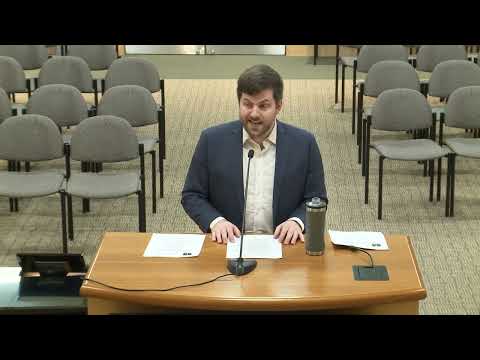
Jack Brooksbank, the city attorney for North St. Paul, told the Planning Commission at its March 5 meeting that commissioners must be cautious about informal communications and follow procedural safeguards when considering land‑use matters.
“A meeting is any collection of a quorum of the body,” Brooksbank told commissioners, explaining that for a seven‑member planning commission “more than 50% of the total members” (generally four members) constitutes a meeting that must be properly noticed. He cautioned that serial communications — forwarding emails or chained messages — and even coordinated comments on a social‑media thread can, in some circumstances, meet the legal definition of a meeting.
Brooksbank also warned that the Data Practices Act can bring personal devices into the public record if the messages concern official business. “If you are texting about city business on your personal phone, those text messages become government data which is discoverable by any member of the public who asks for it,” he said, advising commissioners to forward constituent emails received on personal accounts to their official city email.
The attorney reviewed ethical rules that trigger recusal: financial interests, family ties and business relationships can create a conflict and should be disclosed on the record. He noted that an abstention typically counts as a no vote unless a member is formally conflicted out. On gifts, Brooksbank described the statute’s broadly worded prohibition on gifts from interested persons and said small promotional items are the typical de minimis exception.
Brooksbank walked commissioners through land‑use procedures they will use most often: the comprehensive plan as the high‑level policy document; zoning ordinances as the enforceable rules; and public hearings for zoning changes or conditional‑use permits. He explained the 60‑day rule for completed applications and the consequences of missing that deadline: unless extended by the city or by the applicant, a complete application can be deemed approved by operation of statute.
On quasi‑judicial matters such as conditional‑use permits and variances, Brooksbank emphasized the need for written findings tied to the code. He summarized the practical‑difficulties test for variances and said such decisions are common sources of litigation: “Conditional use permits and variances are one of the most common ways that cities get sued,” he said, urging careful recordkeeping and legally grounded findings.
He illustrated the legal risk with a recent case he discussed from another jurisdiction: when decision‑makers actively campaign against an application outside the public hearing record, courts can overturn local decisions. The example underscored his repeated advice that commissioners avoid advocacy outside the formal hearing and deliberation process.
Brooksbank closed by inviting commissioners to route follow‑up questions to staff and the city attorney’s office; he said staff would help assemble formal responses when needed.
Next steps: commissioners will return to the regular agenda items; there were no public hearings on the March 5 agenda.