Get Full Government Meeting Transcripts, Videos, & Alerts Forever!
Get email alerts on the Special Education topic
No spam. Unsubscribe anytime.
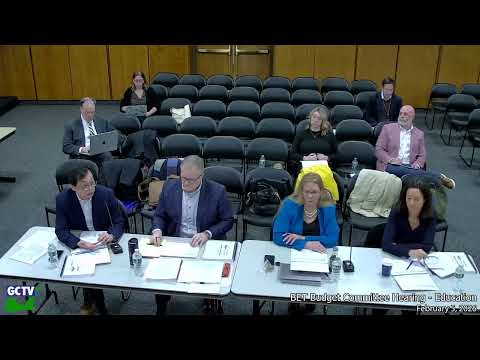
Greenwich BOE flags special‑education reimbursement shortfall and growing PreK demand
Summary
BOE told the BET the district continues to reduce outplacements through new in‑district programs but is exposed to volatility in outplacement and settlement costs; the state excess cost grant was described as capped roughly $781,000 below the district’s eligible excess cost reimbursement.
Board of Education leaders told the BET that special‑education costs remain the district’s most volatile operating item, even as new in‑district programming reduces outplacements.
Administration described five years of an action plan that added local programs — for example a new Positive Pathways program and expanded co‑op classes — that have kept more students in district and reduced reliance on costly outplacements. Officials credited investment and improved processes for the recent under‑budget performance in some years, but cautioned that single outplacements or settlements can still run into the hundreds of thousands of dollars and swing the final result.
On state reimbursement, BOE staff and legal counsel explained the excess cost sharing mechanism (state payments that reduce local excess cost exposure) and said the state’s cap or administrative limits left Greenwich roughly $781,000 short of the full amount the district believes it is administratively eligible to receive. BOE staff noted ongoing legislative discussions in Hartford over capping out‑of‑district tuition and other measures; they said the district is improving Medicaid billing, the excess cost capture process and auditing to maximize recoveries.
The BET also heard a sustained PreK discussion: Greenwich’s public PreK program enrollments have grown and the BOE projects adding classrooms (roughly 18→21), citing improved Child Find and a local birth rate uptick. The district runs a mixed tuition/peer model for PreK: the publicly run 5‑hour PreK program charges tuition (about $10,300 currently) and maintains peer ratios (typically nine peers/6 students with IEPs); administrators warned that the tuition figure does not equal full per‑student operating cost and that a universal‑funded PreK model would carry very large new costs.
Board members asked for more detailed charts and cost‑benefit material showing how in‑district special‑education programming reduces outplacement pressure over time; the administration agreed to provide updated charts and a clearer breakdown of expected revenue from excess cost grant and Medicaid.