Get Full Government Meeting Transcripts, Videos, & Alerts Forever!
Get email alerts on the House Bill 58 topic
No spam. Unsubscribe anytime.
Committee hears proponent testimony for House Bill 58 to regulate recovery housing
Summary
At a committee hearing on House Bill 58, Scioto County Commissioner Scottie Powell urged support for a state-managed certification process for recovery housing, arguing the bill will help shut down bad actors, strengthen minimum standards and empower local prosecutors to act faster.
The Addiction and Community Revitalization Committee heard proponent testimony for House Bill 58, which would create a state-based certification program for recovery housing and set minimum standards for operations. Scottie Powell, chairman of the Scioto County commissioners, told the committee the bill is a necessary next step after a registration requirement created by Senate Bill 138 revealed a large and previously uncounted number of recovery homes in his area.
Powell said HB58 “provides a much needed framework…ensur[ing] local communities can enforce and feel confident that the quality standards are maintained.” He described Scioto County and its seat, Portsmouth, as among the communities hit earliest and hardest by the opioid epidemic and said unregulated recovery housing has contributed to strains on public safety, the housing supply and homelessness.
Powell, who identified himself as a licensed nursing-home administrator and director of operations for a hospice covering much of Ohio, said recovery housing has lacked basic registration, inspection and enforcement mechanisms. He said Senate Bill 138’s registration requirement showed there are “well over 100” recovery homes in Scioto County — a county he cited as having a population of roughly 70,000 — and called that concentration out of proportion to comparable jurisdictions.
On enforcement, Powell told the committee HB58 would empower local prosecutors to pursue bad actors more quickly than current processes, which often escalate matters to the attorney general and delay remedial action. He also said the bill would address situations in which court-ordered patients are left stranded by requiring court systems to pay to return individuals to their home communities when appropriate, a provision Powell said would correct a recurring problem.
Powell acknowledged the bill targets the lowest-performing operators and that it does not yet define detailed quality measures. “What this bill does is at least take care of the bad actors,” he said, adding that defining and measuring quality would require additional data and follow-up work. He noted HB58 would also move certification responsibility to a state agency and establish a work group to recommend best practices.
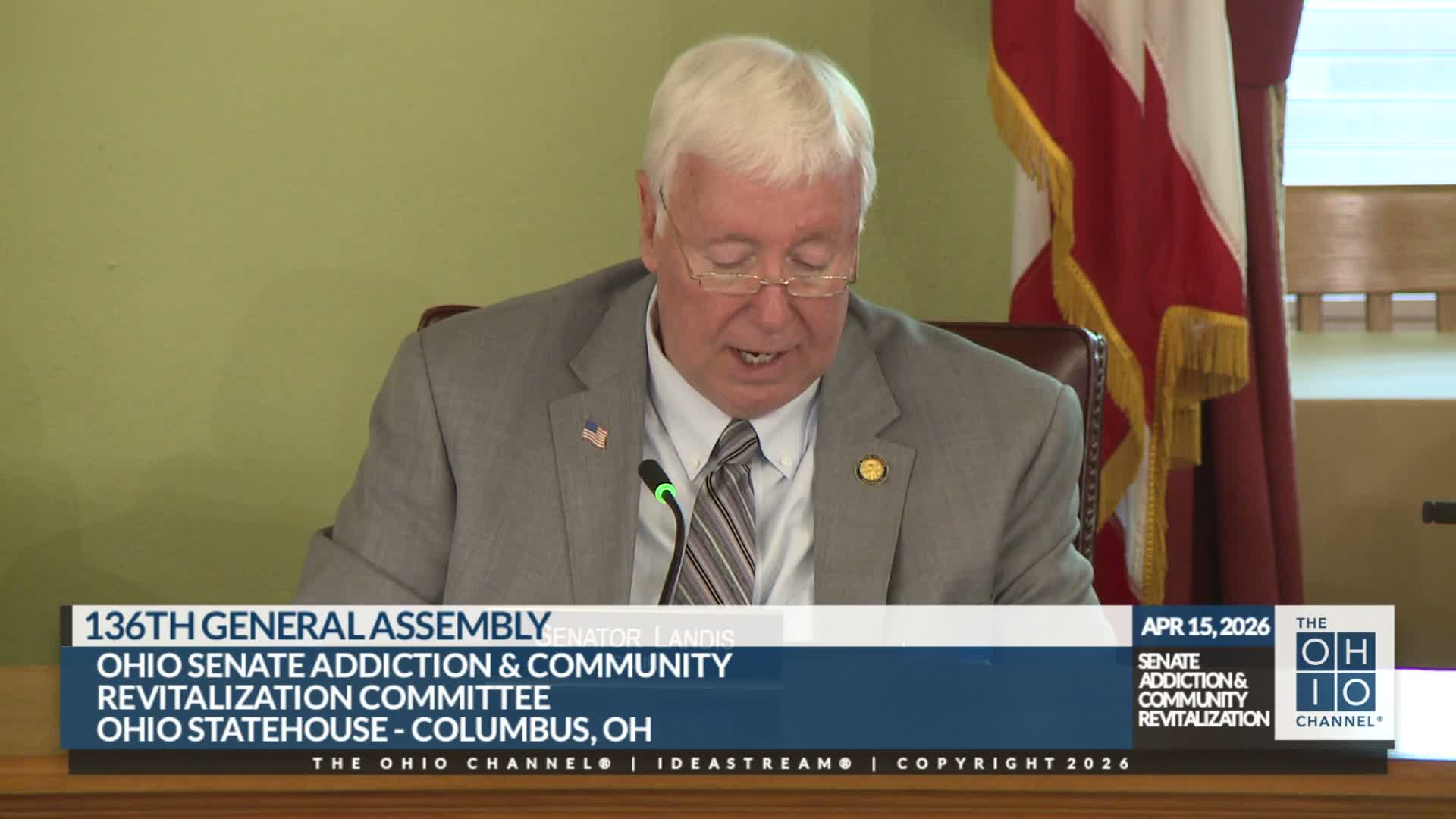
Chair Landis thanked Powell and asked whether the changes would increase the opportunity for successful recovery. Powell responded that the bill is a foundational step that would help identify reputable providers and remove exploitative ones but said more specific quality standards and data collection will be needed to measure outcomes.
Chair Landis called the roll, approved the minutes from the March 24 meeting without objection, noted written testimony from several individuals and the sheriff was available to committee members, and concluded and adjourned the second hearing on House Bill 58.
Next steps: The hearing was a proponent-only second hearing; no committee vote on HB58 occurred during the session.