Get Full Government Meeting Transcripts, Videos, & Alerts Forever!
Get email alerts on the Education Services topic
No spam. Unsubscribe anytime.
ESEs tell Senate committee they delivered substantial pandemic-era federal funds and ongoing cost savings to districts
Summary
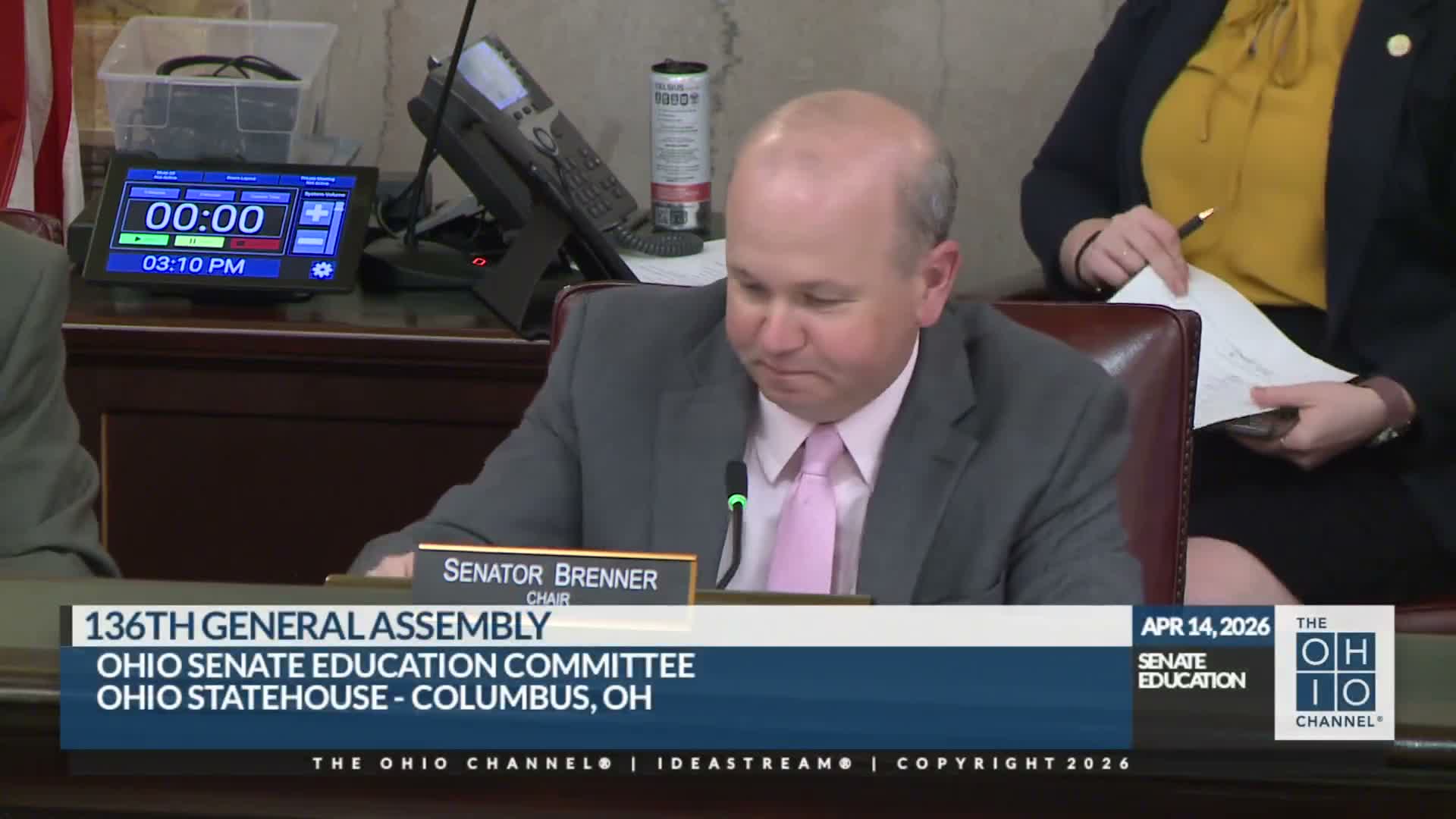
Craig Buford told the Senate Education Committee that Ohio’s 51 Educational Service Centers (ESEs/ESCs) channeled roughly $400 million in federal stimulus funds and produced about $100 million in cost savings to districts in FY25 through pooled services; he urged lawmakers to preserve ESE flexibility and noted administrative overhead is about 6%.
Craig Buford appeared before the Senate Education Committee to outline the role and reach of Ohio’s educational service centers (ESEs/ESCs). "In any given general assembly ... we had $123,000,000 that flowed through ESEs" for learning recovery grants and another "$268,000,000 in emergency assistance to non public schools," Buford told the committee, summarizing federal stimulus flows that he said totaled nearly $400 million over a 3–5 year period.
Buford described the network of 51 ESCs that employ roughly 15,000 people and said ESEs provide direct instruction in core areas to about 30,000 students annually, plus related services to over 250,000 students with disabilities. He said the ESE system delivered roughly $100 million in measurable cost savings to districts in FY25 through shared services, pooled purchasing and itinerant staff. "In fiscal year 25, we did about $2,400,000,000 in business with school districts," he said, and noted an administrative overhead rate "somewhere in the 6% range."
Committee members pressed him on how instructional supports are selected and whether services are evidence-based. Senator Smith asked whether supports such as literacy coaching and math pathways were based on evidence; Buford said the services that ESCs offer are chosen by districts and that ESEs work closely with the Department of Education and workforce to align staff training and implementation with state priorities. "Every one of the ESEs that are offering those services are ensuring that those are evidence based and aligned to best practice," he said.
On fees and pricing models, Buford explained that ESEs operate largely on a fee-for-service basis unless funded for a specific statewide role. He described pooled-cost models for special education, hiring flexibility across districts, and the ability of ESEs to pursue grants on behalf of districts as drivers of ROI. "The majority of our costs go out the door in the form of services, and the people delivering those services," he said.
The presentation aimed to provide context for legislative discussions about proposals in other bills to partner with regional service providers or to expand state support. Lawmakers thanked Buford and concluded his appearance with no immediate committee action tied to the presentation.