Get Full Government Meeting Transcripts, Videos, & Alerts Forever!
Get email alerts on the Urban Design Affordable Housing topic
No spam. Unsubscribe anytime.
Architect Ben Pentreth urges Charleston to put trees, walkability and mixed‑use, integrated affordable housing at the center of Project 3500
Summary
Visiting U.K. architect Ben Pentreth told a Charleston Project 3500 lecture that trees and landscape, 5–10‑minute walkable mixed‑use neighborhoods, and visually integrated social housing (he cited Poundbury’s 35% social housing) should guide the city’s affordable‑housing strategy; he recommended bus networks and upfront transit before new suburban expansion.
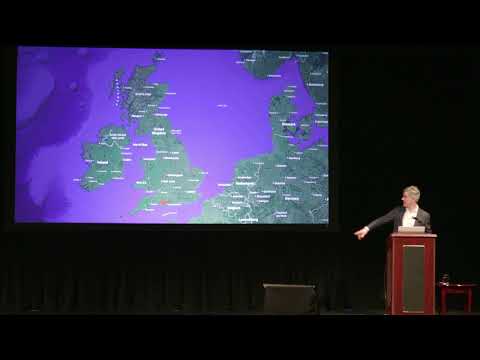
Ben Pentreth, a British architect working with traditional urbanist approaches, told an audience at a City of Charleston Project 3500 lecture that landscape and walkable, mixed‑use neighborhoods should lead the city’s affordable‑housing strategy.
“Landscape is really the most profound element of anything that we’re designing with,” Pentreth said, arguing that street trees and public‑realm design make places “livable, breathable, cool in the heat of the summer.” He said buildings in successful places often act as background while green infrastructure and pedestrian space shape daily life.
Pentreth used Poundbury, the Duchy of Cornwall development outside Dorchester, England, as his principal precedent. He described Poundbury as a long‑running experiment in mixed tenure and local services, saying “in Poundbury 35% of the housing is social housing,” and noting the development reported a mix of rented social units and shared‑equity models for key workers. He added that social housing there was “visually indistinguishable” from private housing, a deliberate approach to reduce stigma and integrate residents across incomes.
Pentreth distilled four planning priorities for new places: a vibrant mix of uses so daily needs sit within a five‑ to ten‑minute walk of homes; pedestrian‑friendly street networks rather than cul‑de‑sacs; a mix of housing types across blocks so residents do not have to move neighborhoods as their incomes or household needs change; and use of architecture to create a recognizably “somewhere” — a sense of place sustained by public spaces and human‑scaled buildings.
He illustrated those points with multiple case studies — Favversham, Tonagrain near Inverness and projects in Cornwall and Scotland — that prioritized topography, local materials where feasible, allotments and parks, early delivery of civic amenities such as schools and shops, and phasing that makes the public realm usable from the outset.
On feasibility and funding, Pentreth told the Charleston audience that such projects typically require a land owner or sponsor willing to accept lower short‑term returns in exchange for long‑term value creation. “You have to have somebody who owns the land who has a long‑term vision,” he said, describing the Duchy and the late Prince of Wales as examples of patient land stewardship that enabled higher‑quality public realm and tenure diversity.
When asked about transport — a frequent constraint in areas built around cars — Pentreth said that where heavy rail or metro systems are not realistic, cities should invest in frequent, affordable buses and use pricing (higher city‑center parking costs) to shift travel patterns. “I would not allow any new housing to come forward in suburban Charleston unless the bus was already in place,” he said.
Audience members pressed Pentreth on whether these models require wealthy patrons. He responded they do best when a long‑term landowner or public sponsor is willing to accept slower financial returns and invest in early community infrastructure; he also argued that well‑designed places can raise private values over time while delivering public benefit.
The lecture emphasized practical tradeoffs: local, historic materials can support local economies but sometimes raise upfront costs, and some high‑quality materials are sourced internationally for price or availability reasons. Pentreth recommended early delivery of community anchors — particularly schools — to reduce social friction between new and existing neighborhoods.
Josh Martin, a city representative who opened the evening, reminded attendees that a work‑in‑progress presentation for Project 3500 would follow Friday at 5:00 p.m. at Dock Street. The session closed after a question‑and‑answer period in which Pentreth addressed transit, materials, and neighborhood impacts.
Next steps: the Project 3500 design team will continue workshops this week; the city’s advertised closing presentation is Friday at 5:00 p.m. at Dock Street.