Get Full Government Meeting Transcripts, Videos, & Alerts Forever!
Get email alerts on the Mychart Parental Access topic
No spam. Unsubscribe anytime.
Parents and advocates press committee to restore MyChart access for minors' guardians
Summary
Parents told the Senate Health Committee that some health systems restrict parental access to adolescent MyChart portals after age 12, and they urged House Bill 162 to standardize proxy access (proponents suggested age 18) and require better education and transparency from providers.
Multiple parents and advocates told the Senate Health Committee that current MyChart and patient‑portal practices sometimes block parents' access to adolescent records and that House Bill 162 would restore or standardize parental proxy access.
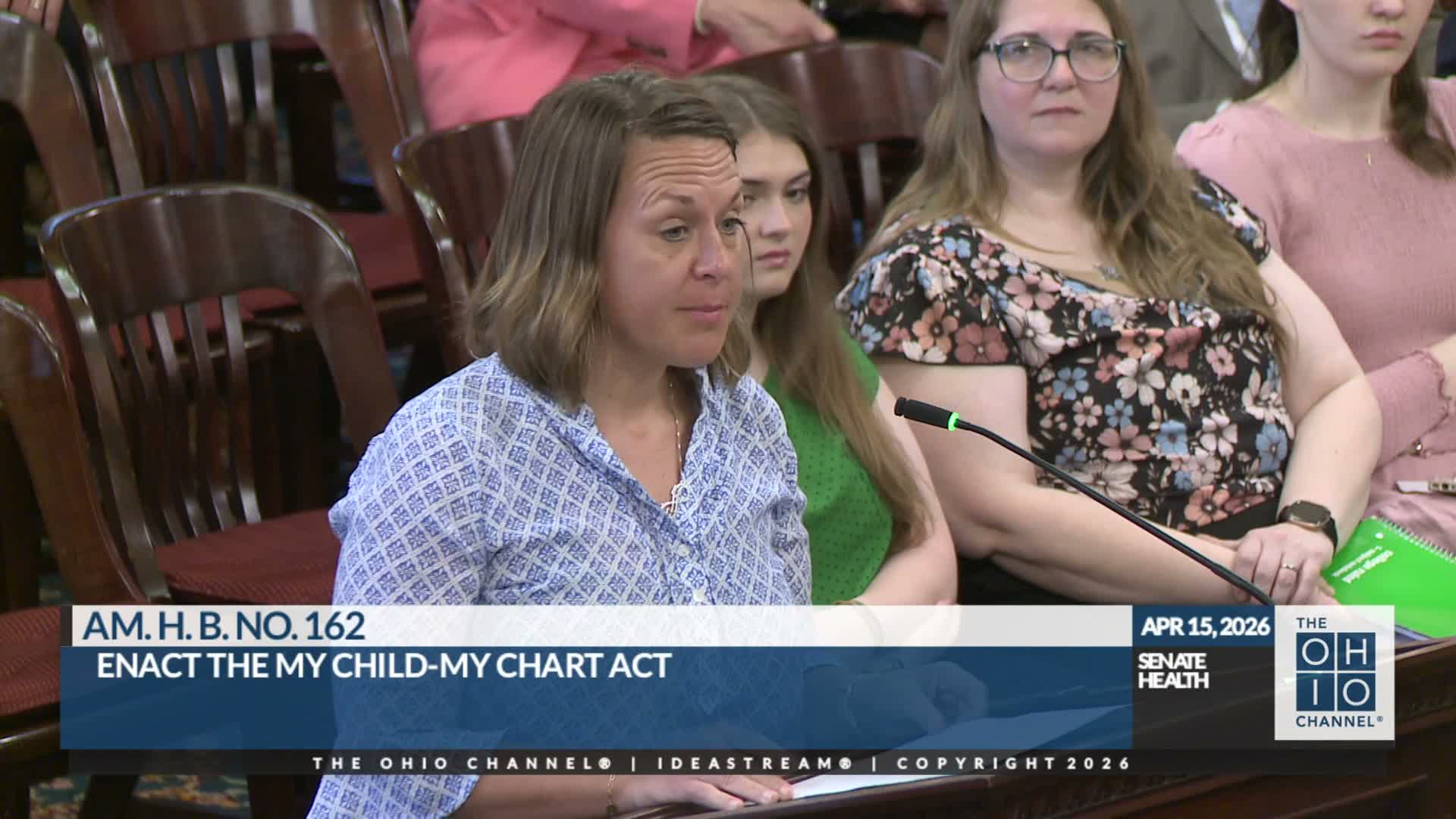
Katie Deland (S10), who identified herself as a mother of five, said her 15‑year‑old son’s visit produced no visible bill in her portal and that she later received a collection agency notice for $86.52 from Premier Health; she said she then learned Premier had removed proxy access after age 12 unless the child specifically granted it. "The mere fact that healthcare providers can hold parents and guardians financially responsible while withholding our access to the very medical details we are paying for is beyond sane, logical, or reasonable," S10 said.
Deland told the committee she supports raising the proxy cutoff to age 18 and urged legislative action because she believes system policies will not change without state law. Lisa Breedlove Chaffee (S11) and Jocelyn Patel (S12) offered similar testimony about being blocked from their children’s charts, missed appointment links, and the need for transparency and education so both parents and minors understand the portal controls.
Committee members (including S6 and S7) raised practical questions: how hospitals would verify whether a parent pays insurance, whether a uniform cutoff like age 18 is feasible, and how to ensure both parent and minor are appropriately informed each year. Witnesses and members acknowledged technical and policy variation among systems and suggested adding yearly notifications and education to implementation plans.
The committee accepted written testimony from other proponents and closed the hearing without a vote.