Get Full Government Meeting Transcripts, Videos, & Alerts Forever!
Get email alerts on the Child Online Safety topic
No spam. Unsubscribe anytime.
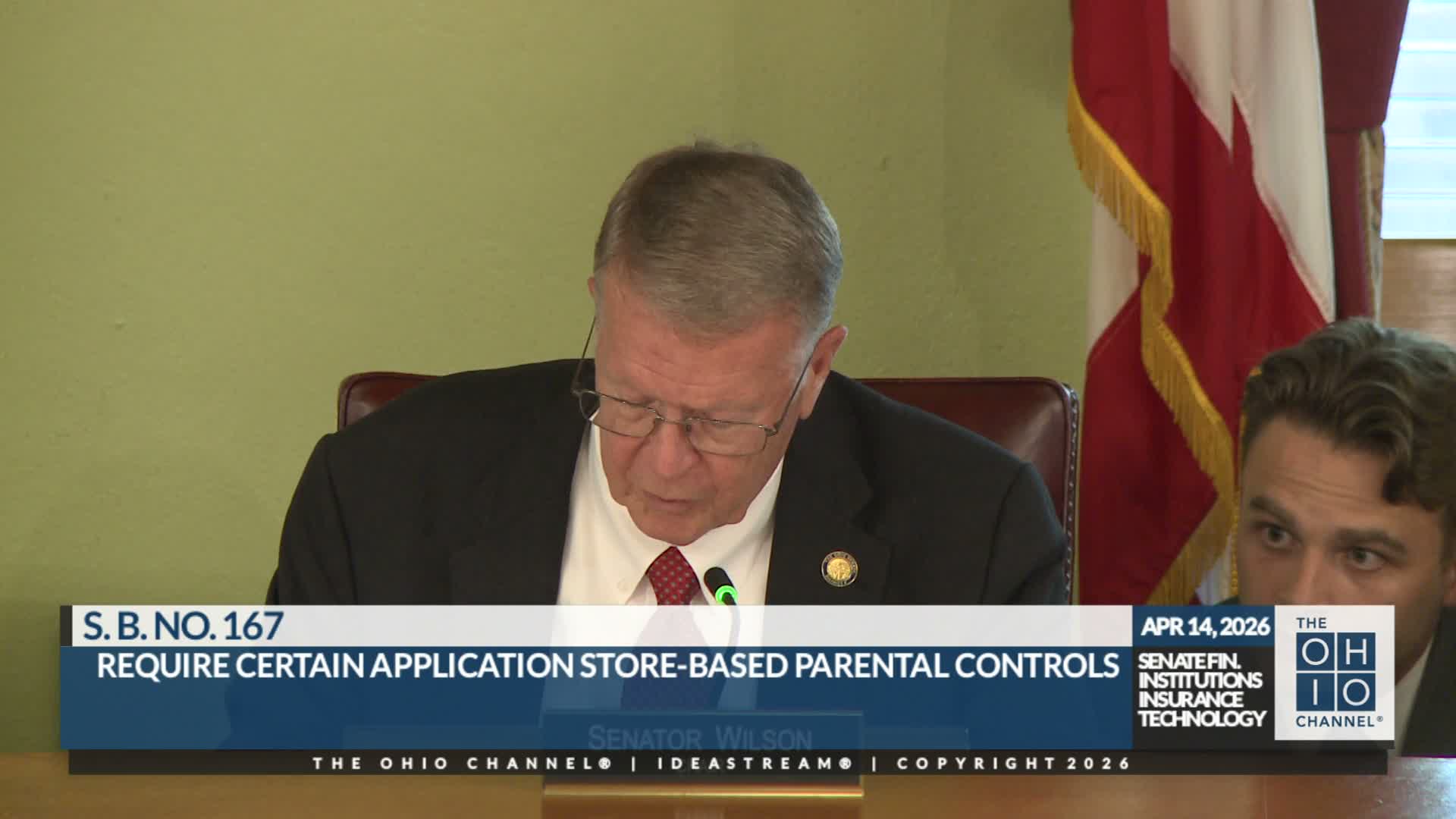
Ohio committee hears competing bills to require parental controls on teen app downloads
Summary
The Senate Financial Institutions, Insurance and Technology Committee heard competing proposals: SB 167 would require app stores to verify age and obtain parental consent before teens download apps, while substitute SB 175 would create an operating-system age signal shared with apps. Tech companies, faith groups, developers and suicide-prevention advocates gave opposing views on privacy, constitutionality and effectiveness.
A Senate committee on Tuesday heard dueling bills intended to keep children safer online: SB 167, the App Store Accountability Act, would require app stores to verify a user's age and obtain parental consent before a teen may download an app; substitute SB 175 would instead rely on an operating-system age signal shared with apps to deliver age-appropriate experiences.
Proponent testimony for SB 167 came from Chris Rehnkes, Meta's public policy director for Ohio, who told the Financial Institutions, Insurance and Technology Committee that "protecting teens online is a shared responsibility and everyone must do their part" and that the App Store approach would allow a single, secure age-verification checkpoint at the store level. Rehnkes cited a recent poll he said found "80% of Ohio parents support legislation that would require parental approval through an app store" and said the bill has been signed into law in four states.
Opponents, led by the Developers Alliance, said SB 167 would impose broad mandates on app makers and risk constitutional challenges. "Laws that govern how kids download and interact with content should focus on protecting users and not benefit one platform over another," Chris Grimm of the Developers Alliance said, arguing the bill could block innocuous educational apps and harm small developers.
Supporters of SB 167 included faith and parent groups. Sean Parker, national president of the Republican Catholic Coalition, urged passage as a tool to "defend the family" and give parents more control over what their children download.
Google testified in favor of the substitute SB 175. Kate Charlotte, who leads Google's public policy work on privacy, cybersecurity and youth safety, described a system-level age signal captured during device setup that an operating system could share with apps, telling apps whether a user is a child, younger teen or older teen. "This bill creates a critical privacy-first layer of protection through a system-wide age signal," Charlotte said, adding that the substitute is meant to minimize the privacy-invasive identity checks that other proposals could require.
Committee members questioned witnesses on several fronts: constitutional risk, precedents in other states, industry lobbying and the practicality of enforcement. Senator Mora pressed Meta on whether Texas's similar law had been enjoined in federal court; Rehnkes replied that courts are still considering those constitutional questions but said parents should have the opportunity to consent. Senators also asked whether savvy teens could bypass parental controls; Meta acknowledged the risk but said the App Store approach would minimize evasion compared with requiring dozens of individual app verifications.
Mental-health and child-safety witnesses underscored the urgency of action. Terry Coder of the Ohio Suicide Prevention Foundation described recent youth suicide losses and urged lawmakers to adopt measures that would withstand court review and help parents protect children.
The committee did not vote on either bill during this session. Committee members indicated a range of views: some said an app-store requirement is the clearest way to ensure parental consent, while others favored the substitute's system-level, privacy-focused approach to avoid constitutional exposure. The committee encouraged members to review written testimony before further action.