Get Full Government Meeting Transcripts, Videos, & Alerts Forever!
Get email alerts on the Education Policy topic
No spam. Unsubscribe anytime.
DeKalb schools ask state to modernize QBE funding and boost student mental-health staffing
Summary
DeKalb County School District Superintendent emphasized a push to update the decades-old QBE funding formula and urged increased funds for counselors, school-based mental-health coordinators and CTAE workforce programs; student speakers echoed calls for faster access to care.
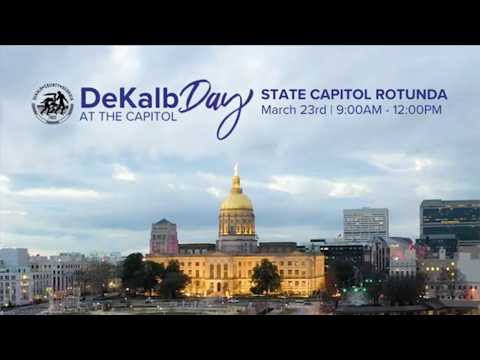
DeKalb County School District leaders used DeKalb Day at the Capitol to press state lawmakers for targeted changes to school funding and more sustained investment in student mental-health services.
"The QBE formula has not been updated since 1986," Superintendent Dr. Norman Sauce the Third told the assembled audience, calling the Quality Basic Education funding formula outdated for present costs such as transportation and the growing impact of poverty. He asked for targeted updates and additional weights for economically disadvantaged students.
Dr. Sauce listed other legislative priorities: expanding Career, Technical and Agricultural Education (CTAE) pathways and industry certifications, increasing school counselors and psychologists to meet recommended caseloads, creating district-level mental-health coordination, expanding pre-K offerings (noting DeKalb as the state's largest pre-K provider) and strengthening retirement and benefits for classified staff such as bus drivers and custodians.
Student speakers reinforced the message. Talia McPherson, an eighth grader from Stephenson Middle School, urged lawmakers to make mental health "accessible and stigma-free," while Gavin Brown, a senior at Druid Hills High School, pressed for faster access to care and more funding. Brown referenced House Bill 1013 as identifying coordination barriers and called for action rather than more study.
Superintendent Dr. Sauce cited district metrics — more than 138 schools, roughly 91,000 students and a reported graduation rate the previous year of 81.4% — as evidence of continued progress alongside the need for greater state support.
No votes were taken; district leaders said they will continue to press the General Assembly for the funding and policy changes they outlined.