Get Full Government Meeting Transcripts, Videos, & Alerts Forever!
Get email alerts on the Urban Design Public Realm topic
No spam. Unsubscribe anytime.
Vince Graham urges Charleston to prioritize the public realm as Project 3500 advances
Summary
At a public charrette session, developer Vince Graham told attendees that zoning and auto-centric funding block walkable, mixed-use neighborhoods, urged using retention features as parks for flood control, and said Project 3500 sites will be pre-approved with 50% affordable units.
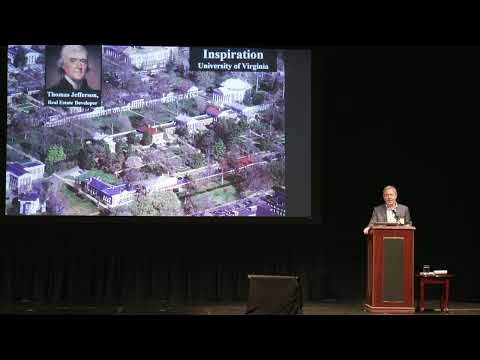
Vince Graham, a developer and urbanist who founded Lo-Kai Design and led the development of I'on, told a public charrette in Charleston that the city should prioritize the public realmthe streets, squares and shared spaces that shape daily lifeas it advances Project 3500.
Graham said the public realm must be presented as a "positive vision" people want to follow. Quoting Martin Luther King Jr., he opened his remarks: "If you want to move people, it has to be toward a vision that's positive for them, that taps important values, that gets them something they desire, and it has to be presented in a compelling way that people feel inspired to follow." Graham used that framing to argue design and public investment should emphasize beauty, hospitality and inclusivity.
Graham drew on decades of practice and examples including I'on, Newpoint and other infill projects to make practical points about compact streets, connected grids and small-scale public spaces. He said a highly connected street network gives people many route choices and allows narrower, slower streets that are safer and more walkable. "If you have a lot of ways, the streets can be small, right? And they diffuse traffic," Graham said.
He also described technical and financing details from past projects: developing simple design codes, forming local "guilds" of builders to preserve craftsmanship, using phased development to adapt rules over time, and working with towns on public-private arrangements to install sidewalks and trees more affordably.
On flood mitigation, Graham recommended treating retention basins and lakes as both infrastructure and public amenities. "You can create a beautiful amenity out of it," he said, citing Colonial Lake as a model for letting water flow out at low tide and using the basin for storm events.
During a wide-ranging question-and-answer session, Graham identified regulatory barriers as the largest obstacle to producing walkable, mixed-use neighborhoods. "Zoning basically outlaws these kind of neighborhoods from being built for the most part," he said, adding that public investment decisions over the last century have prioritized highways and suburban infrastructure.
He addressed constraints from other authorities as well. Asked about fire-code limits, Graham said projects preserved a 20-foot clear zone required for fire access while using narrow right-of-ways and design maneuvers to calm traffic; he also noted the value of project team members who can "speak the language" of fire officials.
On Project 3500 specifically, Graham described how the city's pre-approved sites include affordability commitments: "They will be pre-approved for a certain number of houses, 50% of which will have to be affordable, either for rent or for sale and stay that way," he said, adding that developers who do not accept those terms should not respond to the request for proposals.
Audience members asked about daylighting creeks such as Gadsden Creek, converting large but underused parks into more active public space, and how to create variety in large developments while moving quickly. Graham said daylighting and repurposing retention infrastructure "would have to be looked at," and repeated that the charrette's work and a clear city vision could inform zoning changes and the peninsula plan.
The session closed with a reminder that the charrette's work-in-progress presentation will be at Dock Street on Friday at 5:00 p.m.
This report summarizes the presentation and the on-the-record questions and answers from the public session. Attributions are based on speakers identified in the charrette transcript; when questions did not include a name they are described as asked by a meeting participant.