Get Full Government Meeting Transcripts, Videos, & Alerts Forever!
Get email alerts on the Property Tax Levy topic
No spam. Unsubscribe anytime.
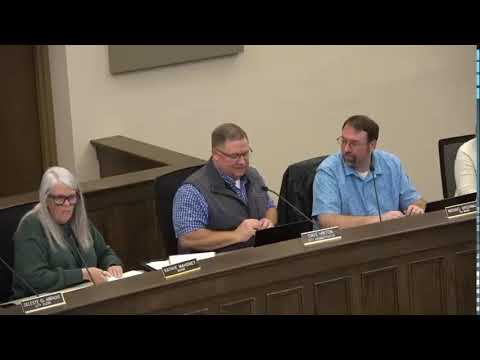
Keokuk City hears residents’ hardship concerns at property tax levy public hearing
Summary
At an April 3 public hearing, Keokuk City staff explained that the 21.02% figure on mailed tax notices is a state calculation and not most taxpayers’ actual change; staff estimated a 7–8% city portion increase. Multiple residents and a county supervisor urged spending restraint and relief for seniors and fixed‑income households.
Keokuk City officials opened a public hearing on April 3, 2025, on the city’s proposed property tax levy and fielded a steady stream of residents who said rising local levies are making it difficult to stay in town.
City staff told the audience the prominent 21.02% figure printed on many mailed tax notices reflects a state formula used for reporting, not the typical household’s actual bill. Staff said they confirmed with the Iowa Department of Management that the city’s working estimate for the coming year is a roughly 7–8% increase in the city portion of property tax bills, and they outlined components — higher liability insurance and debt-service assumptions tied to a previous $7 million bond that was later cut back — that contribute to the proposed rate.
Why it matters: residents said the increases are already unaffordable for seniors, disabled people and others on fixed incomes. The hearing brought repeated requests for clearer information, targeted exemptions and for the council to prioritize cuts before increasing levies.
Several residents described the real-world impact. "This is one of the most confusing documents ever printed on paper," said Terry Bracklesber, who urged the council to "do your due diligence" and warned fixed‑income households face trade‑offs between health care, food or housing. Kathleen Balmani said her taxes have "literally tripled" since she returned to Keokuk, and that she cannot see equivalent improvements in local services to justify the jump. "My social security hasn't tripled," she said.
Bonnie Evans described a home whose assessed value is lower than purchase price even as taxes and insurance rose, leaving her escrow payment higher than her mortgage payment. "My tax and insurance combined is higher than my mortgage," she said, adding that she has limited income and that annual increases are pushing residents toward leaving the city.
Zach Benedict, who read prepared remarks, urged fiscal restraint and greater transparency, saying Keokuk has long been among the highest‑levy cities in Iowa for its size. "We appear to be crippled by our insurance, our employee benefits, and our debt service," he said, and asked the council whether the city has a prioritized list of planned expenditures that could be reclassified into "essential, nice‑to‑have and luxury" items.
Lee County Supervisor Ginger Nisley — who identified herself as District 5 supervisor — said she has been scrutinizing departmental budgets and encouraged council members to question every line item. She noted the figures discussed that evening equated to roughly a $1 per $1,000 increase on property value and urged the council to "meet us halfway."
City staff described steps they have taken to reduce the impact: department heads were tasked with cuts during budget preparation, some anticipated insurance increases came in lower than feared, and city leaders said they trimmed a planned bond from $7 million to $5.5 million to reduce debt service. Staff also said that once the statutorily required form is submitted to the state it is locked but that the city can lower figures afterward (it cannot raise them). Staff encouraged residents to check Lee County’s website for exemption information and to apply for age‑based, veteran and homestead exemptions if eligible.
The public hearing record closed at 5:30 p.m. with no written objections reported. City officials said they expect to finalize budget and levy decisions at upcoming meetings; staff indicated the council planned to finalize the budget at a meeting scheduled for April 17, 2025.
What’s next: the council will consider final budget and levy adoption at a future meeting after staff complete final figures and verify insurance and debt assumptions. Residents were urged to apply for available exemptions and to contact staff with follow‑up questions.