Get Full Government Meeting Transcripts, Videos, & Alerts Forever!
Get email alerts on the Land Use topic
No spam. Unsubscribe anytime.
Red Hook trustees reopen debate on North Broadway study and consultant access after contested adoption
Summary
Trustees debated a readoption resolution for the North Broadway Corridor land‑use and zoning study and a separate governance resolution that would dissolve a long‑running working group and require equal access to consultants, sparking a heated exchange about process, historic narratives and how draft documents are developed.
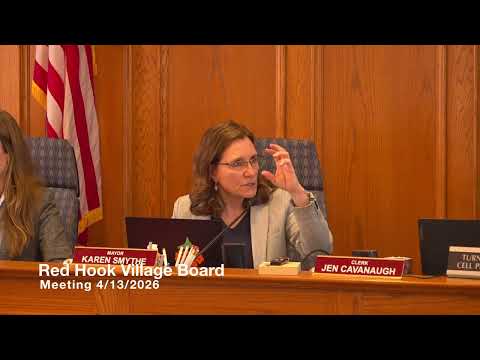
The Village of Red Hook’s April 13 board meeting reopened a contentious debate over the recent adoption of the North Broadway Corridor Land Use and Zoning Study and a separate governance proposal that would end an informal zoning review working group and require equal access by all trustees to consultant drafts.
Trustee Uku introduced a resolution to rescind the March 23 adoption and to readopt a stamped version of the study with three specific changes: (1) add a county‑recommended footnote clarifying methodological differences in demographic tables, (2) include a five‑year periodic review provision required under Village Law §7‑722, and (3) remove narrative descriptions of historic properties from the operative text and retain them only as a non‑operative appendix. The purpose, she said, is to avoid creating unintended legal or policy weight for descriptive (and partly owner‑supplied) historic narratives.
Planner Bonnie Franen and the village land‑use attorney explained the difference between technical corrections and substantive amendments. Victoria, the board’s land‑use counsel, told trustees that edits that alter policy or the study’s operative content would require a fresh public hearing, county referral and an updated Environmental Assessment Form. She also said the version adopted in March was the same clean file circulated to trustees and the county; the omission of the attached study from the printed resolution was an administrative error that can be corrected in the minutes and clerk’s file.
The meeting turned into a broader governance confrontation. Trustee Uku’s parallel “parity” resolution accused the mayor and deputy mayor of operating an informal zoning review body that directed consultants outside public meetings, limiting other trustees’ ability to review draft work product. The draft parity resolution would dissolve that body, require that all consultant drafts and redlines be distributed simultaneously to every trustee, prohibit substantive direction to consultants outside duly noticed public meetings, and require the village clerk to transmit consultant work product to all trustees promptly.
Planner and attorney statements were sharply different in tone: the planner and some board members defended working groups as efficient, describing a common practice in small municipalities where two trustees and consultants workshop drafts before presenting them to the full board. The attorney advised that formal committees that carry out board business can be subject to Open Meetings Law, and that while a working group is efficient, the board must be careful about transparency and client‑of‑record issues when attorneys are involved.
Board action: Trustees agreed to place the readoption and governance items on a future agenda for follow‑up and to refer the question of whether certain textual changes are purely technical or substantive to counsel and the planner. They also directed staff to circulate the precise files that were circulated to the county so trustees can verify which version was adopted.
Why it matters: The dispute is both procedural and substantive. If narrative material remains in the operative plan text without independent verification, future boards or applicants might treat it as a policy signal; if changes are substantive they require a formal amendment process under Village Law and county referral. The governance resolution would change how trustees access consultants and how draft legislative work is produced and circulated.
Next steps: Staff agreed to attach the adopted study to the resolution in the minutes, circulate the redline and clean files to trustees, and schedule the amendments/governance discussion for a future meeting once the new trustees have reviewed the materials.