Get Full Government Meeting Transcripts, Videos, & Alerts Forever!
Get email alerts on the Budget topic
No spam. Unsubscribe anytime.
Smithfield presents FY27 draft budget; with a 3% town ask district still faces $361,000 gap
Summary
District administrators outlined a draft FY27 budget that assumes a 10% state aid increase; under the committee's 3% town‑funding scenario the plan still leaves roughly $361,000 to find, prompting proposals to delay purchases, shift staff and seek up to a 4% town contribution.
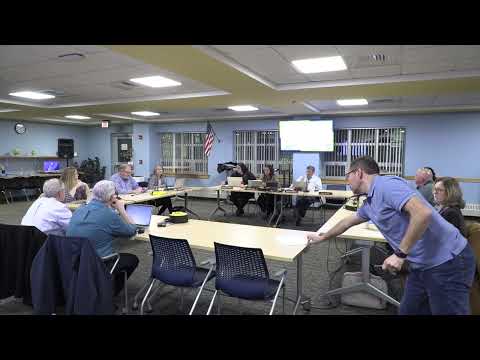
Smithfield school administrators presented a draft Fiscal Year 2027 budget at a January 22 workshop that combines projected state aid increases with multiple town‑funding scenarios and a list of program priorities and potential cuts.
Using the state aid figure highlighted in the governor’s budget and assuming a 3% town appropriation, the district’s current draft budget included cuts and tradeoffs that still leave a shortfall of about $361,000, the superintendent told the committee. “So, if we want to ask the town for just 3%, I need to find $361,000 additional,” the superintendent said.
Key cost drivers reviewed at the workshop include salary and benefits (the largest budget bucket), transportation increases (administrators are budgeting a 10.5% increase in the current vendor contract for year one), and recurring curriculum costs tied to state mandates. Presenters said the district met the June 2023 deadline for math and ELA materials and noted that the science materials deadline was extended to June 2026, which will require further purchases and recurring consumables.
Administrators proposed a set of prioritized additions — including curriculum purchases, technology device replacement cycles (new devices at grade 5 and grade 9 and targeted staff device refreshes) and instructional positions such as language‑learner staffing and an ALP special educator — together with compensating cuts. To close the 3% scenario gap, the presentation included removing four FTEs at the middle school (with the aim of relocating some staff rather than net reducing elementary positions), delaying one‑time purchases such as certain world‑language textbook buys, and postponing nonessential hires.
Panel members debated alternatives: asking the town for a larger appropriation (3.5% or the maximum 4% allowed) would reduce the need for cuts but still might not fund all requested additions. The superintendent presented three scenarios: a 3% town ask (leaves roughly $361,000 gap), 3.5% (gap roughly $189,000), and 4% (almost closes the gap but would still require additional tradeoffs to reach the district’s full staffing request of approximately $50.73 million summarized in departmental asks).
Committee members and union representatives raised concerns about the educational and equity impacts of staff reductions, especially at the middle school, where collapsing a team could increase class sizes and the proportion of students with special needs in a room. Several participants urged the committee to prioritize core instructional needs and to seek the full 4% town appropriation rather than deeper program cuts; others pushed for clear line‑item cost comparisons so the council can see what each proposed cut would save.
Next steps: the committee plans follow‑up workshops (Feb. 5) and a vote on a final recommendation to the town (planned Feb. 26). The superintendent and finance staff will return with more granular cost‑per‑item figures, enrollment‑by‑section schedules to help identify potential FTE reductions, and updated benefit projections from the trust.
Contextual figures cited during the presentation: approx. 95% of drivers and monitors live in Smithfield (transport discussion); approximate per‑bus operating estimate of $600 per bus per day (participant estimate); projected CTE tuition outflows of approximately $719,118 for sending students to other programs; and a district salary bucket increase totaling more than $1.2 million in projected contractual and step increases.